

Chaos Vantage's real-time feedback is now accessible in the viewport, speeding up layout, previs and lookdev for VFX and animation teams, alongside a new set of updates for V-Ray 7 for Houdini and Maya.
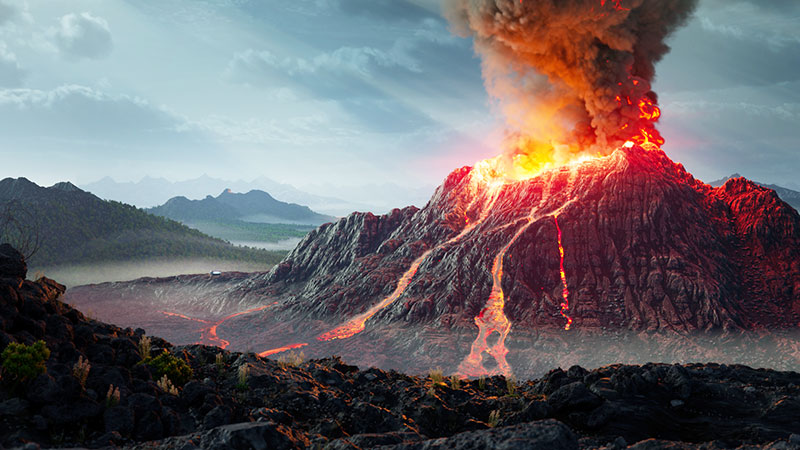
Volumetric fire and smoke.
Chaos has now built instant feedback into the viewport by connecting Maya and Houdini to Chaos Vantage, the real-time path tracer. Artists can now assess 3D assets at production quality throughout the layout and lookdev stages and previs process, giving them the details they need to develop polished, sophisticated designs for film and television work.
A new standalone plugin – Chaos Vantage Hydra Delegate for Houdini – streams fully path-traced pixels directly into the Houdini viewport. This functionality means artists can make decisions using the same controls and workflow they work with every day.
For Maya users, an enhanced Live Link gives access to a similar viewport experience inside Maya. Now, artists can explore layouts, preview animation in context and other visualisations, even when working with massive scenes. Due to support for USD and MaterialX scenes recently added to Vantage, artists can also use the same assets and shaders throughout production, maintaining consistency at each stage.
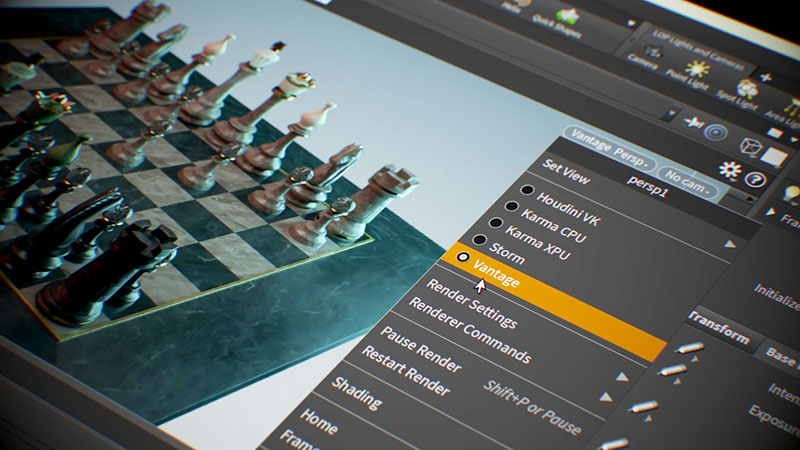
These features are available in the latest Chaos Vantage 3 update. Meanwhile, Chaos has made improvements to V-Ray 7 for Houdini and V-Ray 7 for Maya, which were released in early 2025.
V-Ray 7 for Maya, update 2
With a new V-Ray Displacement Material, Maya artists can create more complex surfaces, blend them across materials, apply them to individual V-Ray Proxy objects and similar tasks. It is also possible to export materials with their displacement.
The V-Ray Night Sky system has parameters for creating realistic night sky setups without HDRIs. These parameters are also animatable to help build complete day-to-night timelapses. Real-world inputs such as date, time and geo-location can be used to achieve precise results. You can also set everything manually and define custom positions for stars, the Moon and other features to match project stories and concepts.
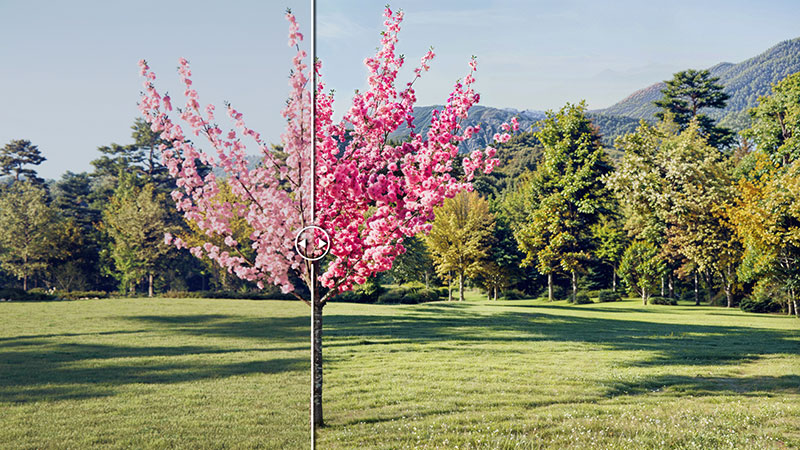
Maya artists can now experiment with Chaos' evolving AI tools, now in Beta, to generate PBR materials. With the AI Image Enhancer, users can automatically enhance details in supporting elements like foliage, people and terrain, and upscale low-resolution renders into photoreal visuals ready for presentation. It helps to avoid repeatedly reworking elements and time-consuming re-renders, and means users can fine-tune specific objects such as clothing or vegetation for greater precision and consistency.
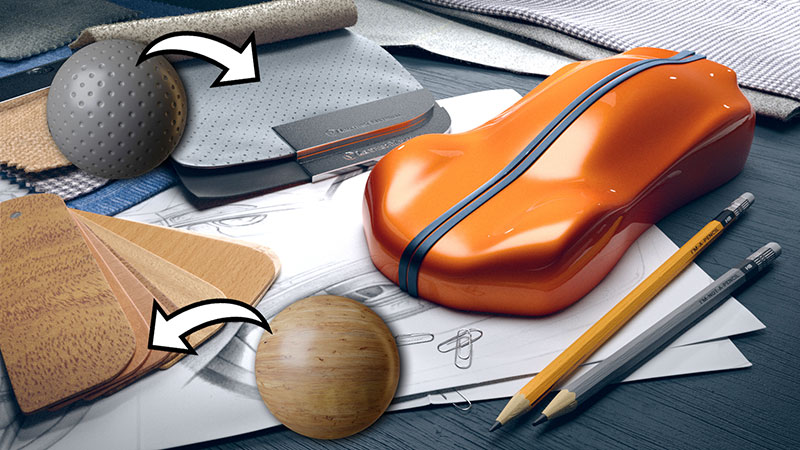
Part of Chaos Cosmos, the AI Material Generator will turn a photo of a real-world surface into a PBR material, ready to render with all the necessary maps, in just a few steps. Users can create secondary materials that don’t require extensive art direction, and quickly shade scenes without special setups or learning to use extra tools.
Finally, the AI Upscaler can deliver crisp, photoreal results while significantly shortening rendering time. Available in Chaos Cloud Collaboration, low-resolution images can be turned into high-quality visuals up to 16K in one click, increasing resolution while also sharpening textures and enhancing fine details.
Owing to the Live Link to Vantage, Maya users can now quickly and accurately simulate smoke and fire, and gain access to lookdev explosions, exhaust trails and fog-like effects for volumetric playblasts.
Gaussian Splats, a major new feature in V-Ray 7 for both Maya and Houdini, now includes clipping functionality. This update allows Gaussian splats to be customized directly in Maya, without regenerating the data. For instance, when integrating real-life scanned environments and 3D assets, artists will find it easier to replace the unwanted areas with 3D models that blend naturally to the environment.
V-Ray 7 for Houdini, update 2
This Gaussian Splat feature is included in V-Ray 7 for Houdini as well, along with several other updates. Volume Shader Enhancements have been developed to help compositors. The volume shader now comes with deep output support, the ability to render volumetrics as mattes, and enhanced Light Path Expressions. Volumetric effects now also render visibly faster due to sampling improvements.
A completely re-designed pyro volumetric shader for fire, smoke and explosion effects has been added, giving artists a new way to employ procedural workflows in Houdini with industry-standard grade outputs.
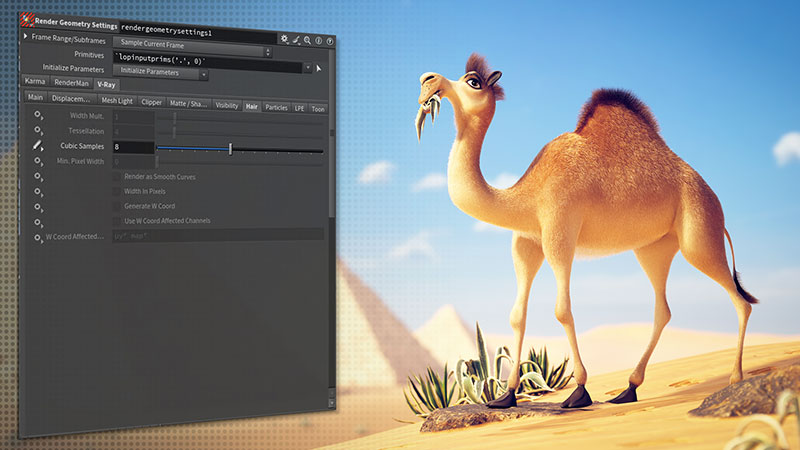
Full compatibility with the Houdini procedural feather system is achieved through V-Ray for Solaris, which now outputs consistent results when rendering Houdini's procedural hair. A new Cubic Samples option also allows finer control over hair tessellation.
Bump mapping effects will now appear consistently across test and final renders, regardless of changes to the resolution.
Attractive, natural-looking motion blur effects can quickly be added that will follow the non-linear trajectories of an object's movement. They work well for any objects that speed up, slow down or change direction, such as a pendulum swinging or swirling particles.
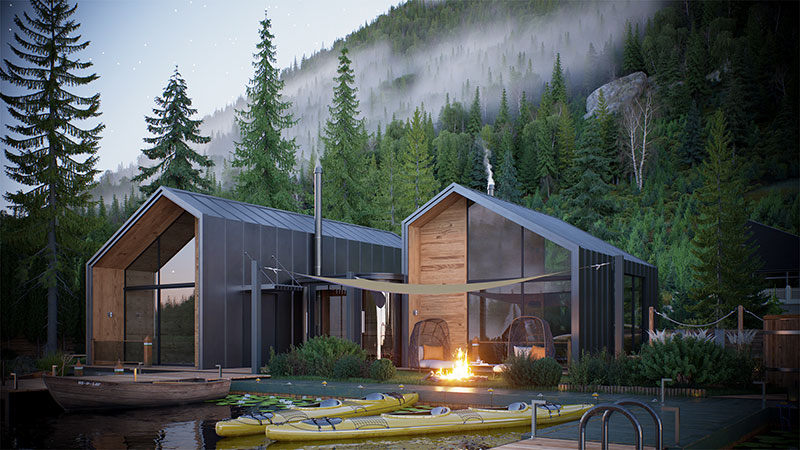
Using the AI Material Generator Beta (see above) in Houdini is a matter of uploading a photo of a real-world surface and seeing it turn into a tileable, render-ready PBR, with all the necessary maps. This functionality speeds up the creation of secondary materials that are able to uphold their realism, even without art direction.
V-Ray 7 for Maya, update 2 and V-Ray 7 for Houdini, update 2 are available now for Windows, MacOS and Linux. Vantage 3.1 and the Vantage Hydra Delegate for Houdini are also available. To use the Hydra Delegate, artists will need a Vantage license and to download a special build from the website. This Delegate does not require a V-Ray license or V-Ray to operate. www.chaos.com