


By acquiring UMeT metadata modification tool, DCS expands from on-set lens data capture into VFX-facing software for frame-accurate metadata control across production and post
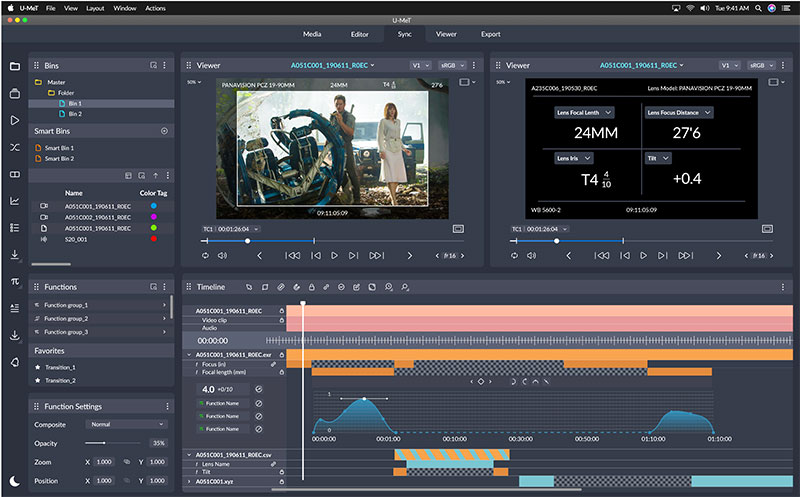
Digital Camera Systems (DCS) has acquired the media metadata application UMeT from CineDev as a strategic expansion beyond on-set capture hardware into a broader VFX software and workflow business.
The DCS Lens Data Translator (LDT) system is used on set to capture lens data through its devices, which record lens values, frame by frame, into camera RAW files. They can also stream live lens information into virtual production tools such as the DCS Unreal live link plugin, Disguise, Stage Precision or Axximetry.
Lens and camera agnostic, lens information is taken from a lens control system, smart lens or DCS’ own lens encoder, LDT-E2. Another example of DCS’ hardware is LDT-F1, a video processing unit that brings the tools from digital filmmaking to film cameras. Cinematographers can see real-time camera and lens information on the monitor via the LDT-F1’s SDI passthrough, and frame their shots using pre-selected or customisable framelines.
UMeT now adds a dedicated layer of control for post-production, giving teams the ability to extract, modify and re-inject frame-by-frame metadata from either sidecar files or embedded media, using a node-graph workflow designed for pipeline use.

Gary Keller, General Manager at DCS, attending the CVP Summer Kit Fest.
Lens Metadata Preservation
Across modern VFX and virtual production workflows, lens and camera metadata can determine how quickly teams move from plates to matchmove, compositing and final approval. But even when lens data is captured correctly on set, it can become incomplete or inconsistent as footage moves through the pipeline, particularly for facilities without large-scale, proprietary tooling. Through this acquisition, DCS is aiming to help productions achieve comprehensive frame accuracy for lens metadata in workflows where DCS is deployed.
“Since founding DCS, we have focused on capturing accurate lens data on set, but we have also seen how often that metadata becomes degraded, lost or inconsistent once it reaches the pipeline,” said Gary Keller, General Manager at DCS. “Bringing UMeT into DCS helps bridge the gaps. It gives VFX and post-production teams practical control to normalise, repair and carry lens metadata through to final delivery. Our goal is to make metadata reliable enough to trust, shot after shot, frame after frame.”
Andrea Michelon, Co-Founder at CineDev, commented, “We built UMeT to give teams frame-by-frame control of metadata, so it survives the journey from set to post. DCS has earned trust in the industry through its lens data work and its customer-centric mindset. We believe UMeT is in the right hands to scale faster, reach more users, and better serve the wider lens metadata community within the DCS ecosystem.”
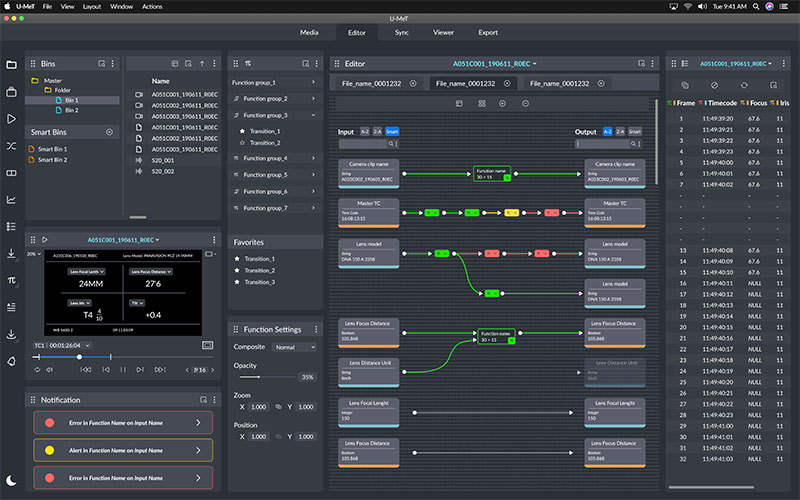
UMeT editor
Advantages for VFX and Post Teams
Designed for integration across content creation software and render pipelines, UMeT helps teams carry consistent metadata into CG, VFX and finishing workflows. UMeT is designed to operate directly on frame-by-frame metadata across camera RAW and common media formats, and can be operated both through a UI and by customising the software to carry out tasks automatically. Made to fit into studio workflows, a Python API and a command-line interface (CLI) are available for automation and pipeline integration, across macOS, Windows and Linux systems.
As well as precise metadata hand-off between camera, VFX and finishing, users can control metadata frame by frame, using a node-graph interface, to modify, interpolate, convert and conform metadata streams. Other capabilities include extracting, manipulating and re-injecting workflows using embedded metadata or sidecars, saving information back into original files or exporting new media and sidecar CSVs.
Building on a Foundation
DCS plans to build on UMeT’s foundation to expand software development for VFX and post-production teams, including a stronger API-first approach, pathways toward cloud deployment and expanded format and metadata mapping support commonly required in VFX deliveries.
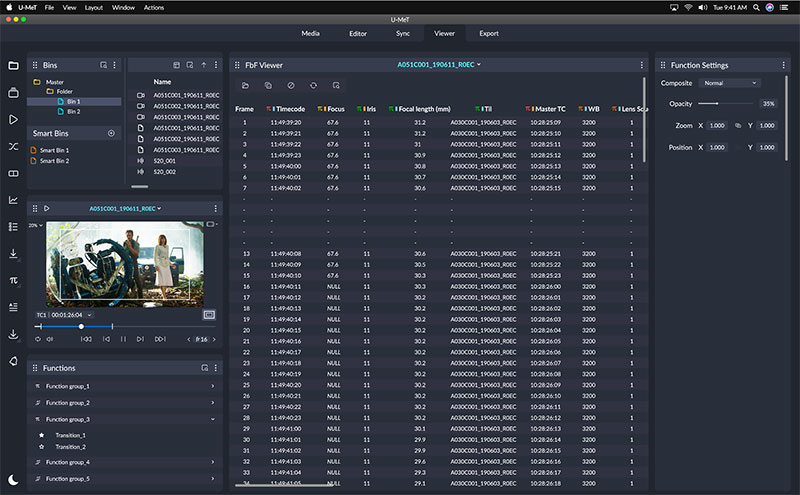
UMeT viewer
DCS’s longer-term vision is to move beyond lens metadata toward capturing and managing a wider set of camera and scene metadata, supporting a more complete digital representation of production inputs. This acquisition is positioned as the first major step in that roadmap.
UMeT will be rebranded and supported by DCS as it is integrated into the wider DCS ecosystem, with a dedicated support hub and expanded roadmap planned for later in 2026. UMeT will be available for purchase directly from DCS in 2026.
UMeT currently offers a 14-day free trial and is available as version-locked, perpetual licensing with no subscription needed. The DCS team is attending Integrated Systems Europe (ISE) 2026 in Barcelona from 3 to 6 February 2026. dcs.film