

The next release of the video player VLC 3.0.24, now in very wide use, will incorporate full support for RIST. The millions of VLC users will be able to access all advantages of RIST.
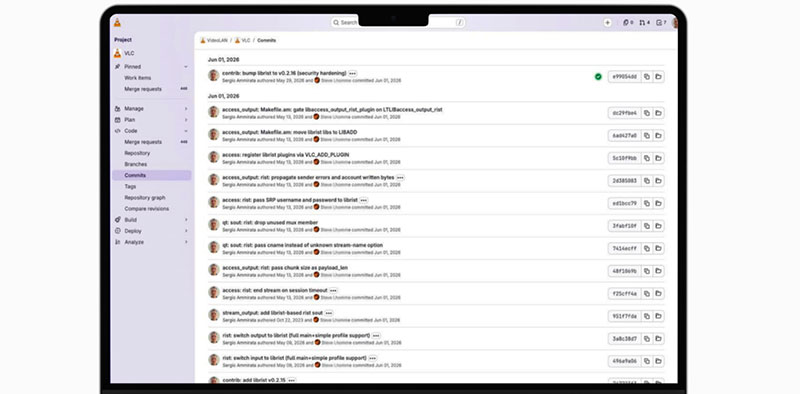
The next release of the video player VLC 3.0.24, now in very wide use, will incorporate full support for RIST protocol, including main profile and some support for advanced profile, as well as the simple profile which is already partially supported. RIST is built on several different profiles, each adding more capabilities. Vendors purchase the simplest profile to obtain RIST interoperability, and from there, develop RIST’s options to become very capable in the more advanced profiles.
The RIST player is built on the LibRIST library toolkit for rapid and secure development. LibRIST was created and is maintained by Sergio Ammirata PhD, SipRadius Chief Scientist. VLC, regarded as a stand-out achievement in software creation, continuation and longevity, originated as an academic project 30 years ago. It has developed into a comprehensive, portable media client for all common operating systems and platforms.
Sergio is one of the expert contributors making up VideoLAN, which now maintains VLC. A critical factor is that VLC continues to run completely free of charge and uncommercialized, which is why it is the most popular media player worldwide. The most recent release from Jan 2026, version 3.0.23, saw more than 286 million downloads, with well over half a billion regular users.
“Users around the world turn to VLC because they know it can open any media file – that is why we all contributed to its development,” said Sergio. “Now those users will be able to take advantage of all the benefits of RIST, and see how it works compared to other streaming protocols like SRT.
“That includes important structural elements, like the ability to stream one-to-many and redundant links, simplifying live distribution,” he said. “Also, there is the hugely important factor of security: RIST is inherently protected end-to-end, ensuring the content is perfectly protected. VLC has used the LibRIST library to build a full implementation of RIST, for any platform, with all its functionality, and we are very proud to have made such a major contribution to this vital piece of open source software.”
Full RIST support will be added to the next release of version 3 of VLC, and forms a key part of the upcoming version 4. VideoLAN remains a not for profit organisation, using the work of open source contributors to further its development. SipRadius is a continuing contributor to VLC, not just through LibRIST, because it firmly believes that universally recognised standards and protocols simplify interoperability and reduce the complexity of software development.
For more information on VLC go to videolan.org, and for more information on SipRadius and its RIST-centric software products, see sipradius.com