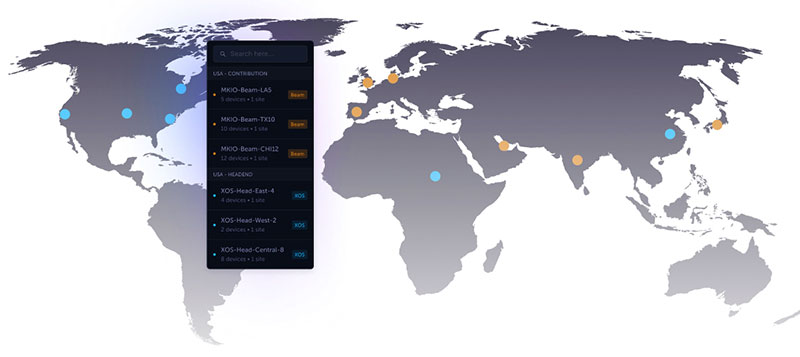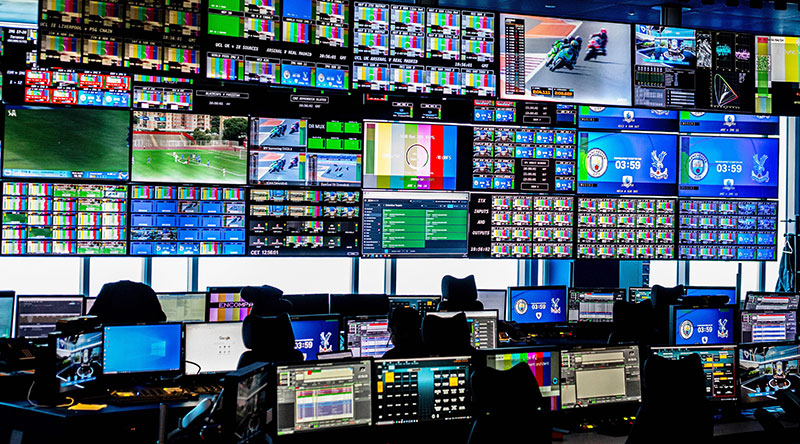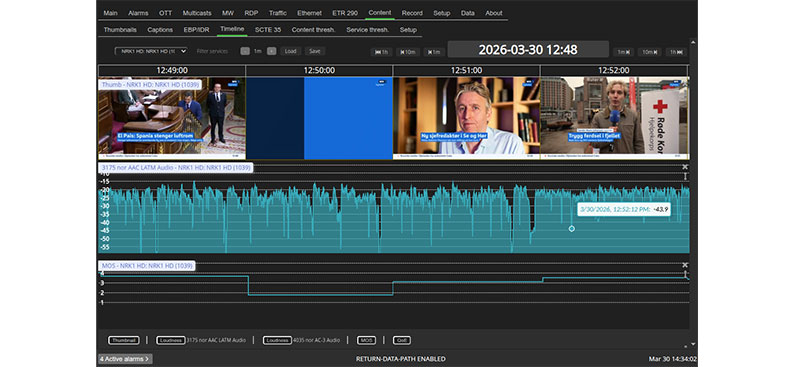


Witbe Vision Language Models are trained on the experience Witbe has gathered while testing and monitoring video services on any device, in any location, across any application.
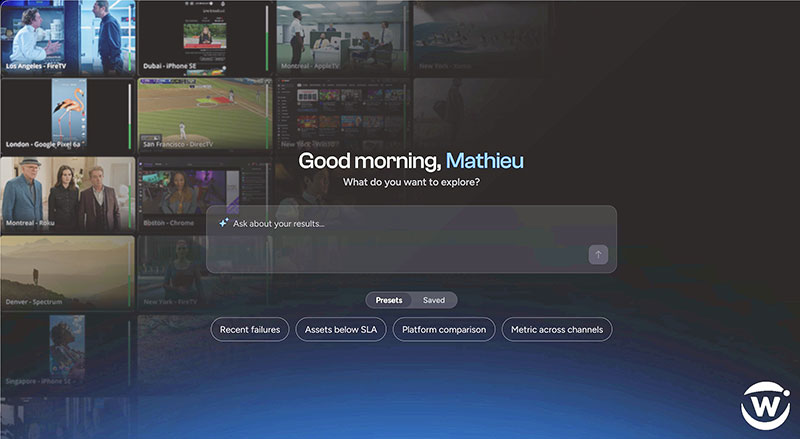
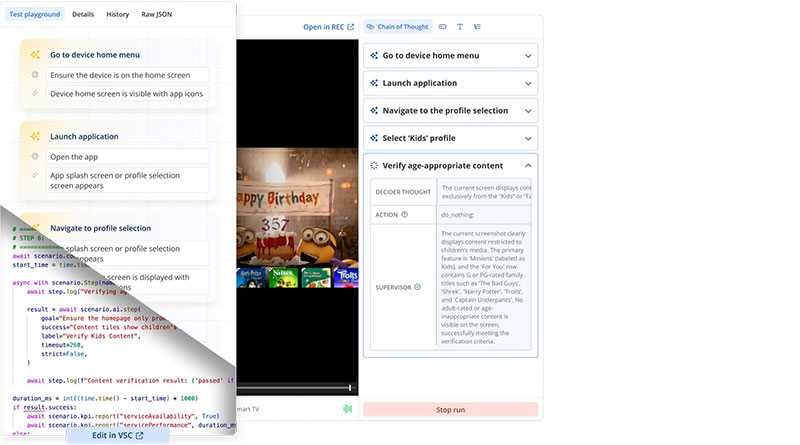
Witbe VLMs are a family of Vision Language Models built and trained by Witbe for video test automation on any device. A year ago, Witbe brought agentic testing to video services, with specialised agents that plan a test, run it on a real device and react to whatever appears on screen. Witbe VLMs work alongside the general-purpose and frontier AI models those agents have been using.
Witbe trains its own vision language models because general-purpose models are trained on the open web, which contains very little information about set-top box on-screen keyboards, launcher grids, or the way a picture freezes on a five-year-old Smart TV. Witbe VLMs are trained on the expertise Witbe has built while testing and monitoring video services on any device, in any location, across any application.
Model Responsiveness per Application
Specialising a model for video test automation and monitoring does not mean it lacks generality – in other words, an ability to understand tasks in context, transfer knowledge between areas of expertise and use this knowledge to reason its way through unfamiliar situations. On applications that the models had never seen during training, they perform on par with frontier models. What transfers and stays the same between applications in this case is how screens and interfaces behave.
What changes for each application is latency, which lowers so that a test suite finishes faster, and the device control in Witbe’s Remote Eye Controller (REC) is more responsive. Witbe’s REC is used to test and troubleshoot on real devices over real networks, from any location with no on-site staff.
The cost per test is also lower, behaviour is more predictable, and users have more control over upgrades.
As the models are deployed inside the client's own infrastructure, test data, including recorded video of the client's service, never leaves that environment, upholding the data’s sovereignty. For operators facing data residency rules or content protection obligations, this is what makes AI in production possible at all.
Proving Results
What does not change for each use case is how a result is proven. Models interpret, deterministic logic validates, and every result stays anchored in KPIs measured on a real device, with recorded video evidence for every run. The AI ratio still sets how much AI each scenario uses, from 0% to 100%. General-purpose and frontier models remain available.
“A year ago, we launched the first agentic testing capability for video services. Today, our clients run our Agentic SDK in production on thousands of Witbox units deployed in the field,” said Mathieu Planche, CEO of Witbe. “The next step was always the models themselves. Ours are trained on data we have gathered while testing video services on real devices, in real conditions. This leads to a better cost proposition for our clients, and a faster pace of execution when the scenarios run.”
“The question we are asked is whether or not a purpose-trained model gives up generality,” said Yoann Hinard, COO of Witbe. “It does not. On applications our models had never seen in training, they perform on par with frontier models, because what carries across applications is how interfaces behave.”
VLM Roll-out
Witbe VLMs are being rolled out now. Access requires AI token provisioning, as with existing Agentic SDK AI capabilities. The majority of Witbe clients are already using agentic testing through Witbe Suite 41 – the company’s automation framework used to generate and execute tests through natural language, hybrid pre-built workflows, or full code-based customisation – so for them the tokens already purchased cover more testing, completed faster. Existing scenarios are unchanged. Deployment inside the client's own infrastructure is available, and requirements are delivered on request.
Witbe to Present at IBC 2026
Witbe VLMs will be demonstrated at IBC 2026, 11-14 September, RAI Amsterdam. Witbe's peer-reviewed IBC paper on eight months of agentic AI in production, in which one engineer increased coverage by 5 times on smart TVs, is presented by Yoann Hinard in the Streaming Technology 2 session on Saturday 12 September. www.witbe.net