Nuke 17.0 introduces native Gaussian Splat support, launches a new USD-based 3D system, expands machine learning capabilities, and extends its Machine Learning tools.
Foundry has released Nuke 17.0, the latest version of its compositing tool for visual effects artists, animators and studios. This release brings the complete, new 3D system out of beta and makes it accessible to artists, following a feedback and development stage between Foundry and its users. The 3D system puts the flexibility of USD into Nuke, assuring artists of data continuity throughout the pipeline, and includes updated projection tools in a 3D environment designed for compositing artists.
Larger Scale 3D System
The modernised 3D system was mainly developed to help artists working at scale, with denser meshes and larger scale scenes. These larger assets need to work in a more efficient, productive manner, and play back in real time as projections or animated textures are added. Compositing artists can now bring in the required assets regardless of size, and apply compositing techniques at any point in the production.
The new 3D system has a USD architecture and adheres to open standards. It supports workflows that focus on performance and scalability, and encourages collaboration between artists.

Creative control is increased with non-destructive workflows for projections, lighting and rendering. Using this type of workflow allows compositors to work more coherently with the lighting artists, FX TDs and layout department, spending less time waiting for asset handovers and seeing exactly what artists in other departments see. The new 3D system also broadens the range of supported materials and shaders, which can be imported from other software, and eases mask and path management with precise selection and targeting.
Juan Salazar, Creative Director – VFX and Animation at Foundry said, "If you're doing heavy cleanup and matte painting, the new 3D system, projections and materials are going to become favourite tools. We're also looking ahead – integrating Gaussian Splats and the Field Nodes into this version opens up a new approach to work for artists."
Noting that Nuke 17.0 introduces a structured, non-destructive way to organize geometry, lights and materials, Sebastian Schütt, Lead Compositor at Image Engine said, "The new 3D system in Nuke 17.0 is a shift in mindset, but I like to get pushed out of my comfort zone – that's often where the real improvement happens. Path-based masking keeps every upstream element accessible at any point in the chain, even at the very end of your setup. You're no longer locked out of individual objects once they're merged, which creates a modular, fully controllable workflow."
3D for Compositors
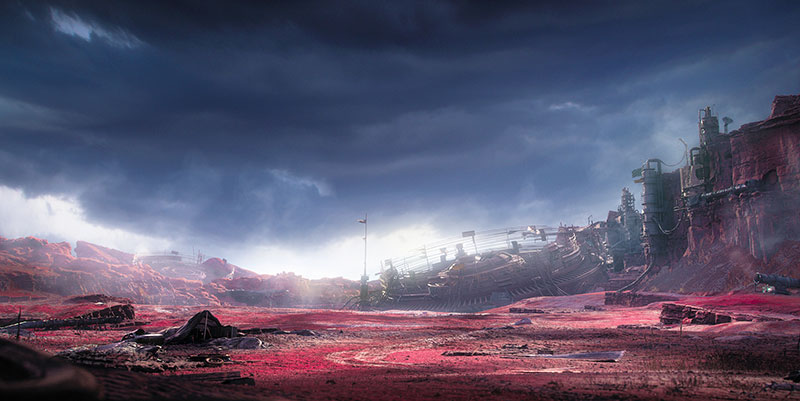
The goal is a 3D system for compositors – not a replacement for other 3D creation software. Although it is based on a USD architecture, it is designed primarily for compositing workflows, to better compose the image and tell the story. Whether it's used for projections for cleanup work, setting up matte paintings, extra simulations to complement a hero effect from FX, or adding background details to guide the eye, compositors will find Nuke’s New 3D System adds greater control over elements and easier management in the scene graph.
For artists challenged by the idea of USD, using 3D in Nuke should feel as it always has – Foundry says USD serves mainly as a foundation for performance, collaborative workflows and better rendering. Furthermore, to ensure users don't lose access to their established workflows, the Classic 3D system nodes are still available in Nuke.
Gaussian Splats
With native support for Gaussian Splats, Nuke 17.0 artists can now import, view, manipulate, render and export Gaussian Splats, opening up new environment workflows for set extensions and matte painting, and allowing more flexibility for element integration.
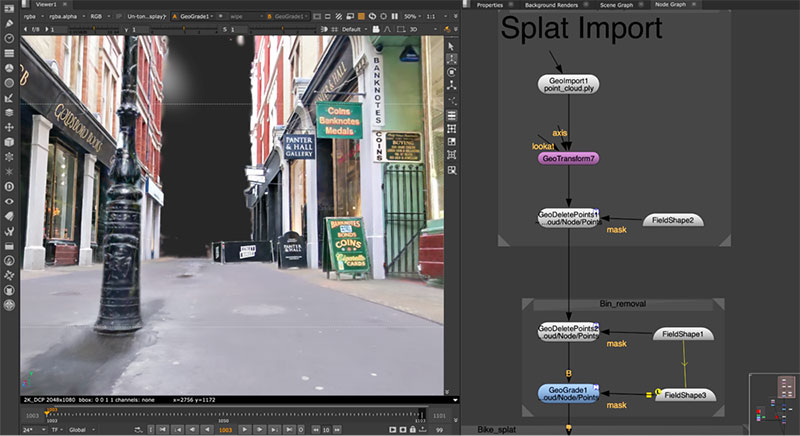
3D Gaussian Splatting creates, renders and represents 3D scenes using very small ellipsoids, called Gaussian splats. Users capture photos or frames of a subject from multiple angles, and analyse the images to determine camera positions and create a preliminary 3D point cloud of the scene. Each point in the cloud is then converted into a Gaussian splat with specific properties – position in 3D space, shape and size for scale and detail, colour and transparency.
Using the SplatRender node renders splats to 2D pixels with controls to adjust colour space, output AOVs and motion blur. Once rendered, artists can then use the splat in existing workflows, such as using the Depth or Deep channels to merge the splats with other elements in your shot.
Gaussian Splats can be manipulated using the Field Nodes, a new system that adds the ability to non-destructively mask and manipulate 3D data, including Gaussian Splats. They are also designed for use elsewhere in volumetric workflows. Examples of the nodes are FieldCrop, FieldMerge and FieldImage.
Annotations, BigCat and Core Image Processing
The annotation system in Nuke Studio, used to add instructions and feedback for compositors, has been overhauled with more responsive drawing tools, including redesigned brushes, a dedicated comment panel and strong visual indicators that result in faster, more efficient review cycles. Feedback and collaboration are clearly documented and tracked to help avoid confusion. These annotations can be applied to a single frame, a frame range, a clip or a whole sequence.
Nuke’s Graph Scope Variable system defines, stores and allows access to data required for multiple contexts or scopes in a single Nuke script. In v17.0, its customisation capabilities are now expanded to improve pipeline connections with a new framework that includes support for Python Callbacks, API integration and other features.
BigCat is a new node in NukeX and Nuke Studio, optimised for large-scale dataset training, starting from the CopyCat machine learning toolset. It can be used to train and solve at the full scale of a project, and is able to train more generalised, reusable models to solve problems across tens or hundreds of shots. BigCat copies sequence-specific effects (garbage matting, beauty repairs, deblurring) from several frames in a sequence and then trains a network to replicate this effect on the full sequence. BigCat outputs a trained network in a .cat file ready for the Inference node to apply the effect.
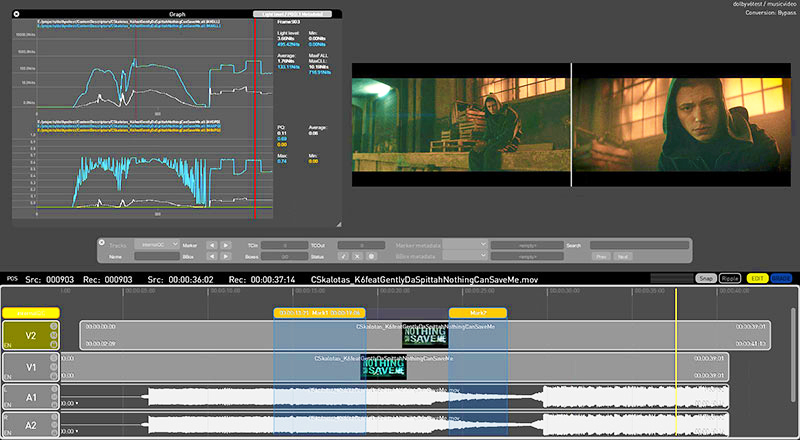
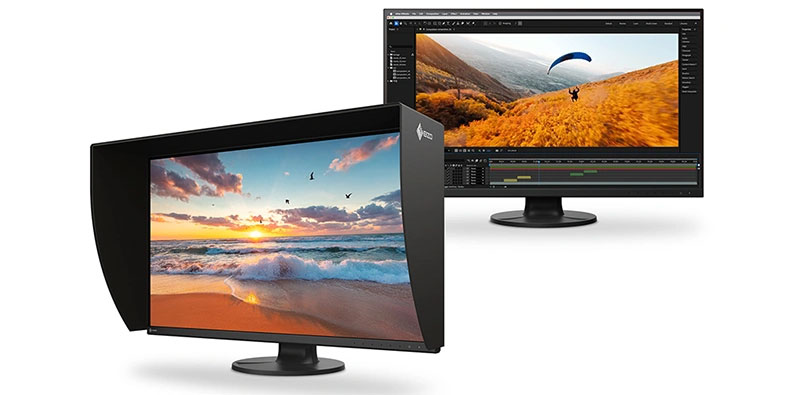
With faster upscaling and Deep composite rendering, the updated core image processing system makes it possible to work at scale with higher gamuts, dynamic ranges or resolutions. Supported formats now include NotchLC and ACES 2.0, among others. It’s now possible to take advantage of the next version of ACES and OCIO colour management, optimised for HDR and SDR content and designed for use in modern colour pipelines. The ACES 2.0 configs are now shipped natively in Nuke.
With NotchLC support, users can prepare footage for use in virtual production and other types of optimised high resolution playback from Nuke. The NotchLC MOV codec is now supported for ingest and export.
Finally, reducing friction between departments and applications, this 17.0 release supports library updates, USD version 25.08, VFX Reference Platform 2025 and others. For studios who need more time to update their pipelines, Nuke 16.1 has been released at the same time and includes most of these same updates, but is built on VFX Reference Platform 2024. www.foundry.com