
Javier Menendez at PFX talks about delivering almost 100 shots for The Naked Gun, including creatures, crowds and digital doubles, blending slapstick humour with perfectly synced VFX.
Post-production studio PFX, which has offices across Central Europe, has lots of experience in photorealistic effects, having worked on Napoleon, Stranger Things, Foundation and many other movies and TV series. But their recent project The Naked Gun presented a new challenge for this team – using technically precise CG effects to tell a story known for exaggerated slapstick comedy.
This movie is the sequel to the original The Naked Gun franchise from 1988. Anya Vinnik, VFX Executive Producer at PFX commented, "The original movie's blend of slapstick humour, visual gags and deadpan delivery became legendary. We needed to achieve the same tonal consistency, while using advances in technology to achieve gags that wouldn't have been possible when the original was made."
The PFX team was fortunate to start working on the project in its early days. After seeing PFX's work on season two of Winning Time, Paramount brought PFX on board during the script stage to advise the production on VFX shots. The relationship between the two teams blossomed, giving PFX the opportunity to expand the size and scope of their award to 96 shots involving CG creatures, crowds, digital doubles, complex compositing – and more. They also enjoyed the chance to work directly with the director, Akiva Schaffer.
From Work – to More Work
Digital Media World had a chance to talk with Javier Menendez, VFX Supervisor at PFX, about the team’s work. “Winning Time proved to be a game-changer for us, not just for the final result, but also for the VES award we won for that project,” he said. “We were already well known and working on US projects, but the award helped to further cement PFX's name in the industry.
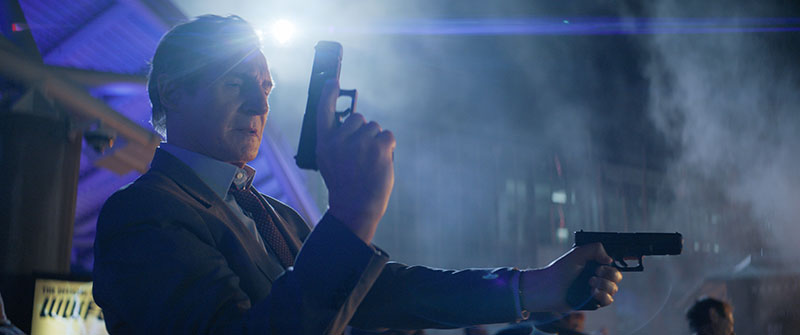
“Our production VFX Supervisor Ash Bettini had been very happy with the final quality and realism we achieved on ‘Winning Time’, and that led her to contact us about taking on the crowd effects for The Naked Gun.
“From there, because of that confidence she had in our work, she left creative room for our team to propose ideas. Feedback was always constructive and open for discussion and every call felt natural – a group of people working together to create something special.”
Being part of the team from the beginning gave them a sound understanding of the size and expectations of the whole project, and kept them in the client’s mind. They had known about the crowd work, but were now also positioned to bid on other VFX tasks as they arose. “Since we knew from the ground up what was needed on this or that sequence, we could get to work straightaway without a lot of explanation time,” Javier said.
Ruffling Feathers
Working on this film opened up the world of comedy to the PFX team, and that meant developing a whole new approach compared to dramas and action productions. The Naked Gun centres on Lieutenant Frank Drebin Jr, who must follow in his father's footsteps and prevent the closure of Police Squad. "Throughout the story, Frank gets himself into unbelievable situations and consistently breaks the fourth wall. Our goal was to support this humour and storytelling, and that meant focussing less on realism and more on what made each sequence fun and engaging for the audience," said Javier.
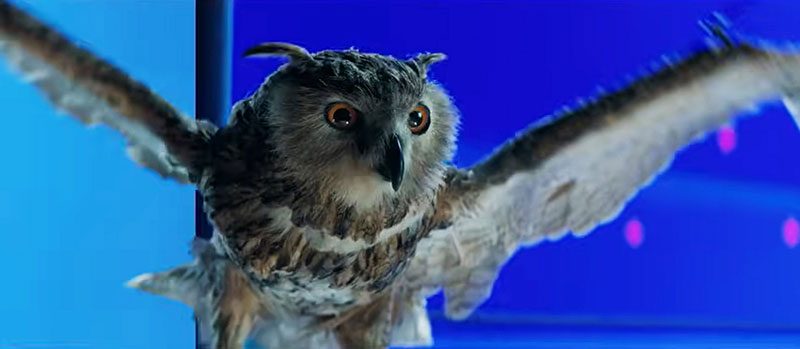
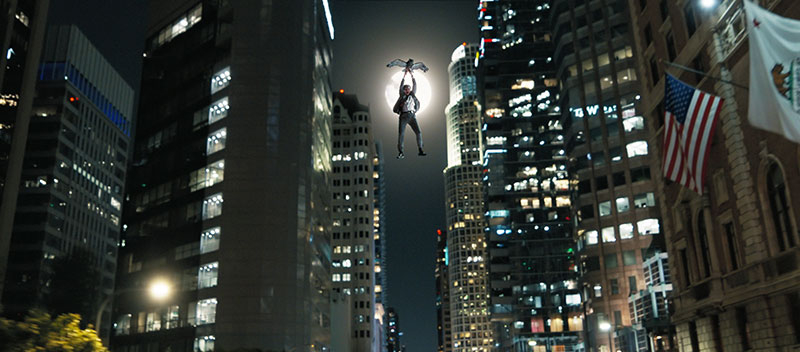
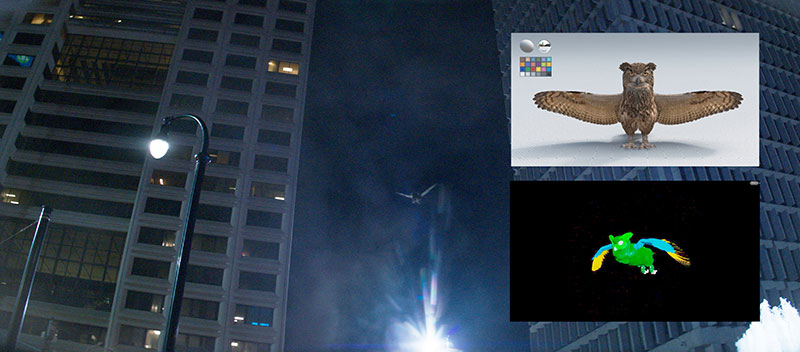
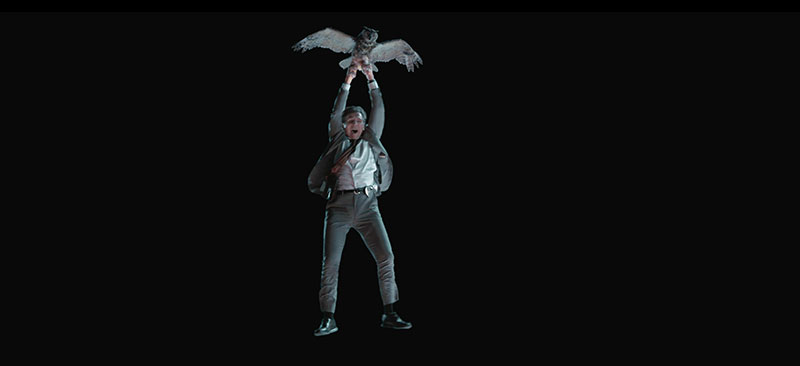
Not every VFX shot needed to be pixel-perfect. In fact, a slightly exaggerated or imperfect element often enhanced the humour. For example, one sequence features Lieutenant Drebin summoning an owl that lifts him up and flies with him into action. For two of the shots, PFX’s job was to create a digital owl, complete with photoreal feathers groomed in Yeti, and using Houdini for look development.
But for the other shots, the ‘Naked Gun’ sense of humour took over – the team abandoned the realistic aesthetic and actually composited in the physical owl puppet that the crew was using on set during production. Javier said, "Even if it looked fake, we felt that for certain shots, that look was more comical than the CG owl. By enhancing the contrast between the puppet and its surroundings, we created a laugh-out-loud spectacle."
Bit of a Joker
He pointed out that, at the same time, this kind of sequence put them on a learning curve. Leaning less on realism let the team work as creatively as possible rather than going solely for the most photoreal result. “We learned to adapt to what the movie needed, and not confine ourselves to what we knew we could deliver. Realising that the most accurate image isn’t always the funniest, we could experiment to see how far to push a certain movement or comedy effect,” he said.
“Nevertheless this approach could also mean working harder. While it made the project fun, it was sometimes challenging to brief the team on what to aim for because some of the tasks were more than a bit bizarre. For example, there’s a scene where Frank hits a character’s tooth. It flies into Frank’s gun, and he shoots it back into this character’s mouth.
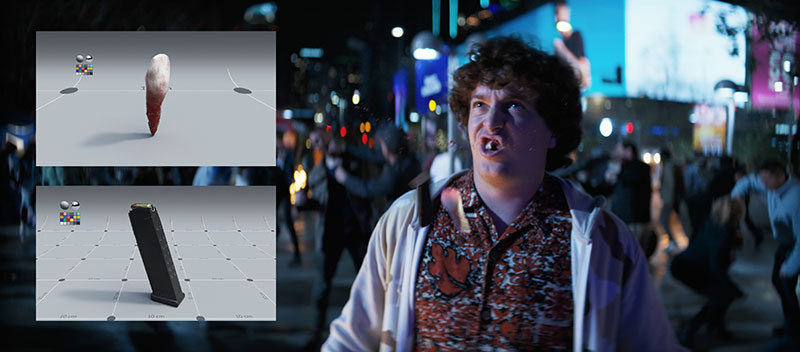
“It’s not the kind of shot we see every day, making it hard to ask the team to not only create it but also take the comedy to just the right level. I must admit that it was fun. Since I am a bit of a joker myself, it was the perfect project for me.”
Timing is Everything
To enhance the slapstick humour of the film even further, the PFX team built a flexible workflow that allowed the director to plan the pacing of each joke precisely. Given the huge number of in-jokes and visual gags crowded into every scene, keeping a good level of control was critical. By creating a flexible VFX workflow, Akiva Schaffer could tweak timing and delivery in post-production, ensuring every gag landed perfectly. To do this, the PFX team used an in-house tool called Crossbow that they use to compare, update and readjust shots on the fly.
Javier described Crossbow as the ‘connective tissue’ across an entire production. “It was born out of a desire to stop hunting through spreadsheets and start making creative decisions in context,” he said.
“For inputs, it takes editorial data – like EDL, XML or OTIO files – and bridges them directly with Ftrack, our production tracking system. This means it’s constantly ingesting a mix of live edit timelines, shot metadata and preview media, from 4K dailies to full-res EXRs. By merging the edit with the status of each task in real time, Crossbow gives us a live, visual map of the show where we can see exactly where every shot stands with a single click.”
Every time an artist publishes a new version, it appears immediately in Crossbow. They can play it back in context, compare it against previous versions, or review it directly against the cut. Notes and comments are frame-accurate and synced in real time with Ftrack, so feedback is always attached to the exact moment it relates to. In this way, artists can quickly see whether their update addressed the note, and how it affects the sequence as a whole.
“Crossbow itself doesn’t modify shots – all creative work still happens in the artist’s DCC tools – but what Crossbow manages is the versioning. Every update is published as a new version, nothing is overwritten, and all previous versions remain available for comparison,” said Javier.
“Supervisors can review those versions side by side and approve the one that should move forward. Once approved, that version is what the pipeline uses for the final sequence or conform, so the whole process stays completely non-destructive.”
Going to Extremes
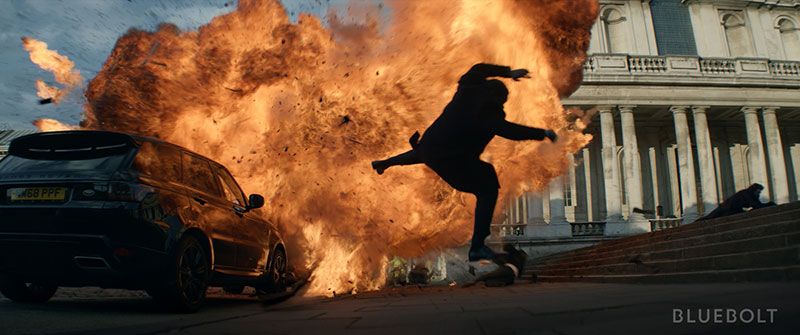
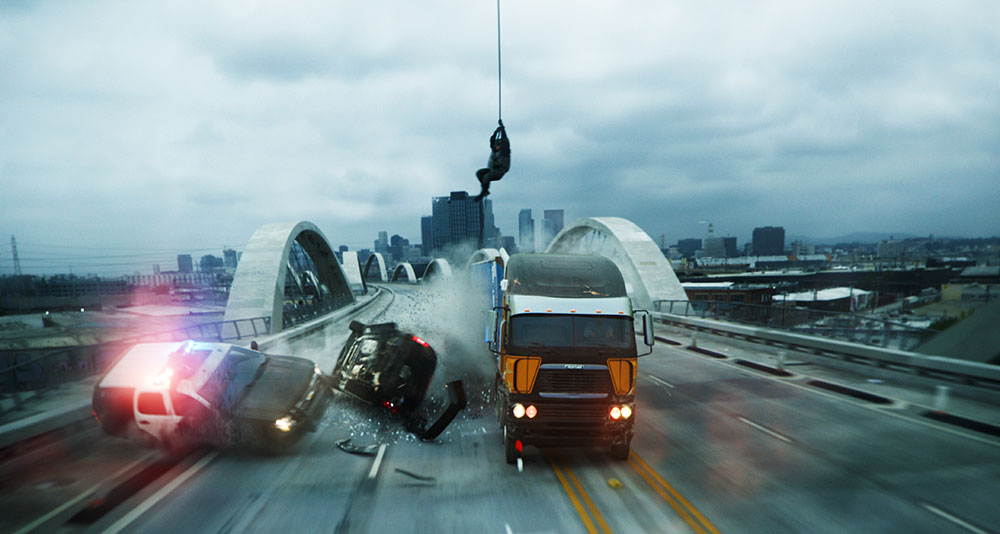
For the film's climactic action scene, the team needed to take timing even more seriously. We see our hero using guns and hand-to-hand combat to fight villainous goons, often to hilarious effect. At certain points, when the action called for digital doubles to perform extreme stunts, PFX worked with both the director and editor Brian Scott Olds to coordinate their VFX work around fast-paced action, complex timing and precise comedic beats.
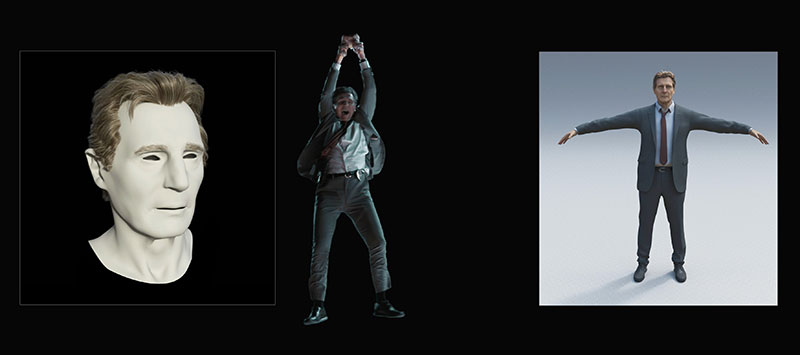
“Because one second can make the difference between a gag landing and falling completely flat, the digital doubles needed to help and not hinder the comedy. We made use of a complete scanning-modelling-rigging-animating pipeline, and also added groom, cloth and hair simulation because Frank needed to fly through the sky at a decent speed,” said Javier.
“In this case, we aimed for high-quality doubles so we could be flexible regarding whatever the sequence would require. In some productions, we can skip various steps if, for instance, the actor is far away or doesn’t need simulations, but for The Naked Gun, we used the full pipeline.”
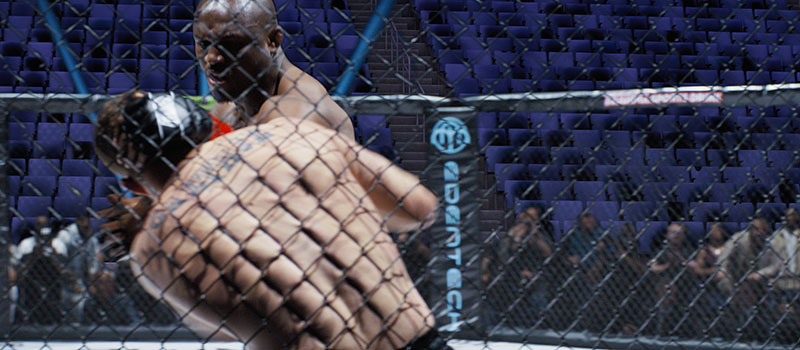
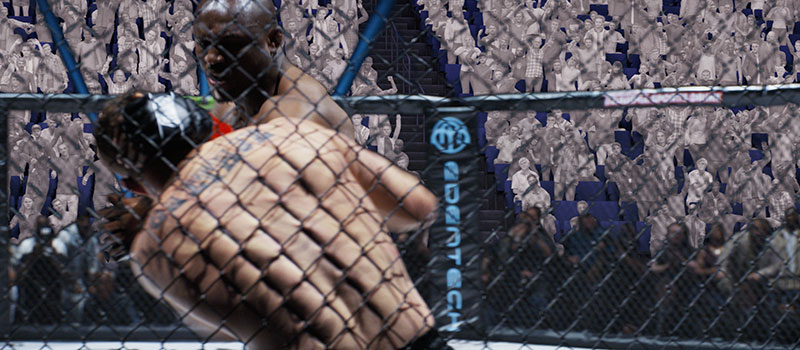
The enthusiastic crowds populating the backgrounds around the fight arena were important as well. As Ashley Bettini had already noticed, crowds are one of PFX's main areas of expertise, though they always present a challenge. For instance, in this film, the crowd animations were very specific to the story.
Motion Capture
PFX already had a wide selection of animations in its library – people cheering, standing and dancing – but some of the other motions they would need were too specific. Knowing that keyframe animation couldn't achieve the desired movements in time, either for the crowds or the digi-doubles, the team held two motion capture shoots at a studio where they collaborated with the stunt team. They captured full-body data of high-energy actions, such as dives, rolls and close-quarters combat, resulting in high-fidelity, physics-based actions that could be retargeted onto digital characters.
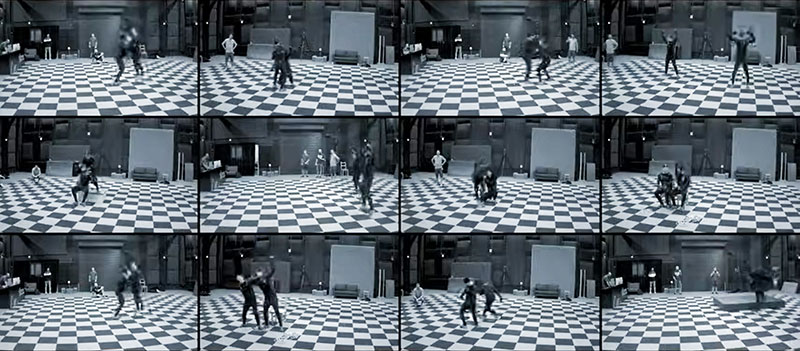
“These mocap shoots helped a lot with the fighting and hugging scenes, and were also a lot of fun,” Javier noted. “The library connects to our pipeline, which makes changing the animation of the agents quick and natural.
“When we receive the motion capture data, we give the animation a clean-up and retarget the rig to fit our rigging system. For long shots, it can be hard work, but our artists are pretty efficient in this task, and the mocap studio had sent back good quality animation, which made our lives easier.”
Crowds and Retimes
“For the crowd FX work itself, we used an in-house setup we’ve built in Houdini, which is fully customisable and very effective, and composited the effects in Nuke. The biggest challenge when it came to crowds was lighting, because the stands on the plates had a very dark falloff. We initially matched the plates, but the client liked our crowds so much that they asked us to brighten them up. Lookdev was done in Houdini and rendered in V-Ray.”
Compositing also presented an unusual challenge, due to significant use of camera retiming to achieve slow-motion and speed-up effects during the action. PFX used custom Nuke scripts to manage camera retiming and Topaz to interpolate new frames allowing them to extend the frame ranges enough to achieve the retime.
“When we were working on ‘Winning Time’, some of the shots were captured in super slow motion with the RED Raptor camera, which required transforming 900 frames into 50 after the timewarp was applied,” said Javier. “Sometimes, aligning to slow motion footage and tracking retimed plates was a challenge, so we ended up creating a script in Nuke.
“It applies the Kronos timewarp done in Nuke, matching the edit to the matchmoved camera of the original slow motion plate, and then shares that camera between the departments. Topaz helped to match the timewarps from editing and reduce the number of artifacts, but most of the time we could clean up those shots in compositing.”
With all of these techniques at their fingertips, the team ensured the film's 3D animation and rendering were perfectly synchronised with the camera, moment to moment.
A New Spirit
Now that work on The Naked Gun is behind them, the PFX team is proud to have created VFX that stay true to the spirit of the original film, and to have created something new that appeals to modern audiences at the same time. VFX Executive Producer Anya Vinnik describes it as “balancing absurdity with precision”.
Javier said, "Working on this production was an incredible experience for the entire PFX team. The relationship that grew between us, Paramount and VFX supervisor Ash Bettini and her team, helped us create an inspirational, friendly environment that could handle editing changes and demanding last-minute tasks." pfx.tv
Words: Adriene Hurst, Editor