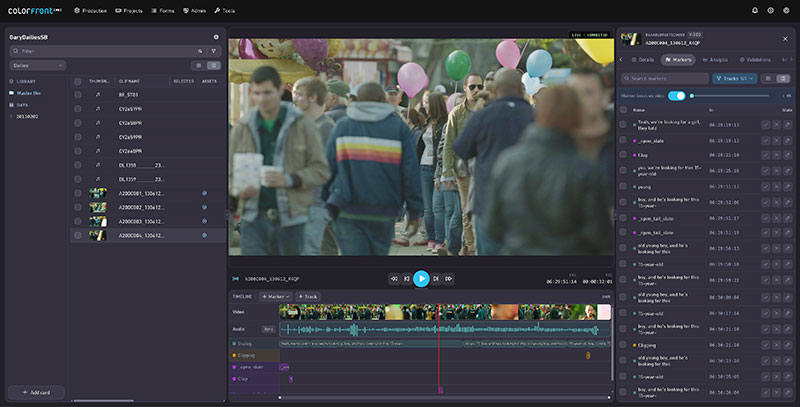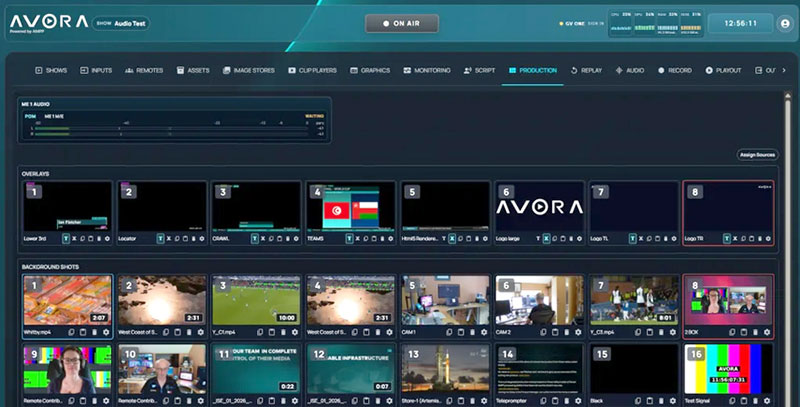


ANI created a centrally managed workflow on a Grass Valley AMPP/Framelight X deployment that captures live feeds and make content rapidly available to editorial and distribution teams.
Asian News International (ANI) operates more than 100 bureaus across India, South Asia and other international locations, supplying text, video and picture content to television networks, digital platforms, newspapers and more than 1,000 news organisations worldwide. Founded in 1971, ANI is one of South Asia’s longest-established multimedia news agencies.
ANI recently created a centrally managed environment for capturing live feeds and making content rapidly available to editorial and distribution teams. This environment is part of a project to update ingest, media management and content distribution across its news operations.
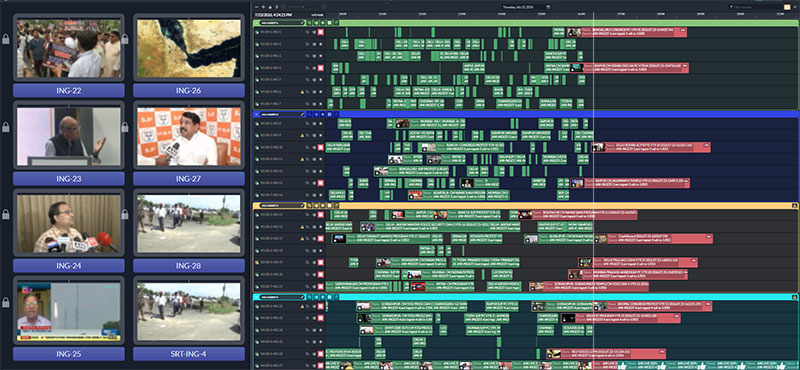
Deploying Grass Valley’s AMPP and Framelight X cloud-based production platform, the organisation has connected four on-premises processing nodes to AMPP cloud orchestration, which supports 32 concurrent scheduled ingest resources across 28 SDI and four SRT channels. To this configuration, the Framelight X solution adds monitoring, media management, clip playback, graphics and workflow automation into the same environment.
“ANI operates continuously across a fast-moving news environment, where incoming content must be recorded, verified and made available to our editorial and distribution teams, with no delays,” said Ishaan Prakash, Director at ANI.
“We use the AMPP and Framelight X platform as a centralised environment for scheduling, ingest monitoring, asset management and automated content delivery, helping us manage a high volume of news feeds while making content available faster for broadcast, digital and social media workflows.”
Managing High-Volume Recording and Ingest
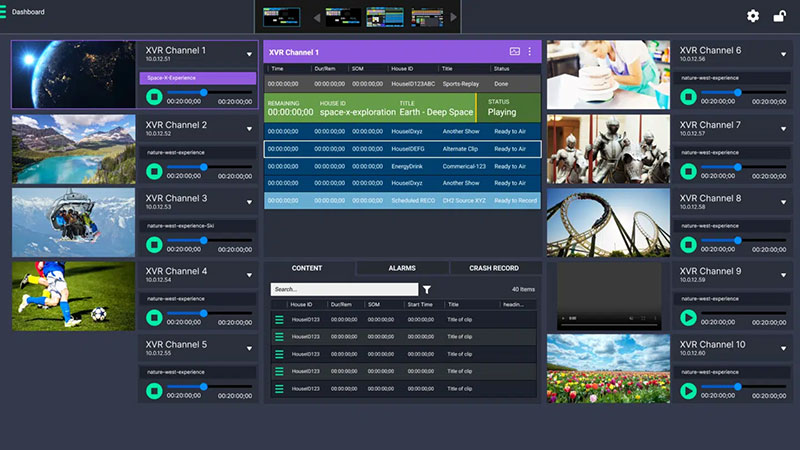
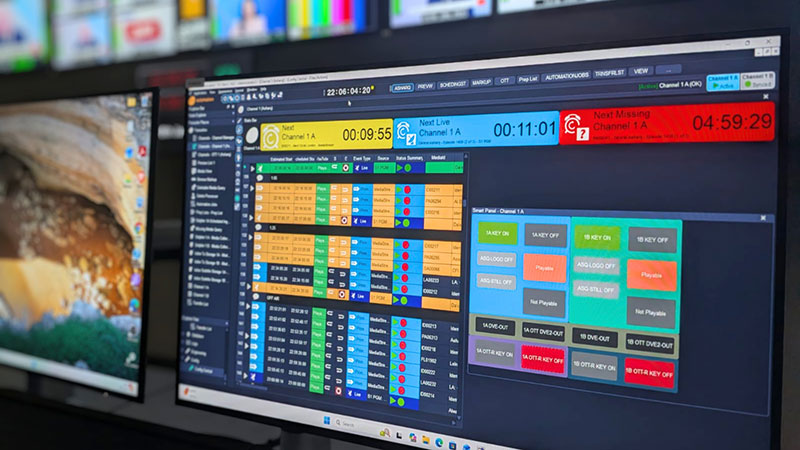
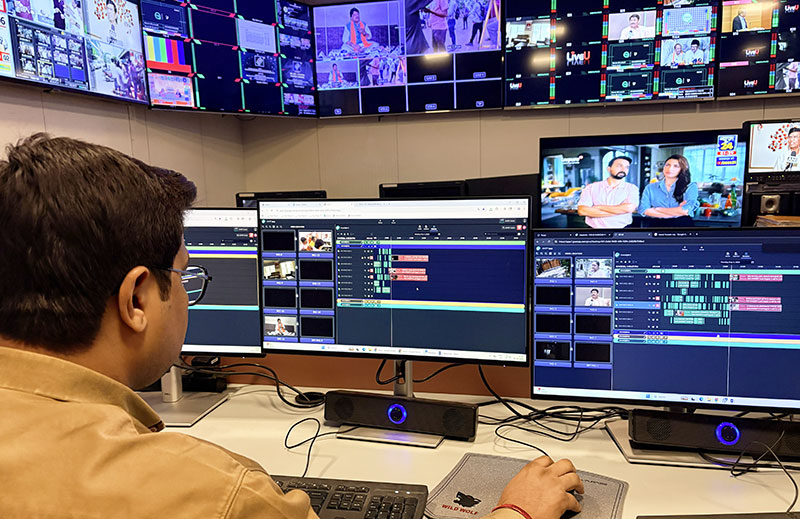
Grass Valley Elastic Recorder X and Scheduler give ANI centralised control of its 32 ingest resources, which means operators can create and modify schedules, assign recorder resources, select sources and monitor recording status from a common interface. Each processing node handles seven SDI inputs and one SRT input, bringing facility and remote IP contribution into the same scheduling environment.
The Elastic Recorder X ingest tool, built to support live production workflows, is integrated with the AMPP platform and Framelight X. It captures virtually any video format from SDI to SRT and instantly stores it to any location, so that remote teams can record, edit and access media from anywhere. By supporting varied inputs, the Recorder is able to record high-res and proxy files on-demand, without hardware limitations.
Where speed is critical, it allows growing file access for editors who need to begin viewing and editing media almost as soon as a recording starts. First, to make sure of compatibility with production requirements, it will convert incoming media to match the target resolution or frame rate.
The Scheduler makes it possible to manage hundreds of channels in the cloud or on premises. Using it to schedule recordings, for instance, includes the ability to view proxy playback within a few seconds, instantly capturing SDI, SMPTE ST 2110, NDI and SRT feeds. Grouping channels makes them easier to find and manage, and supports global updates and read-only mode so all users can work together, anywhere.
More Functionality in the Framelight X Toolset
As well as Scheduler and Elastic Recorder X, Framelight has a diverse collection of tools that make assets simpler to manage.
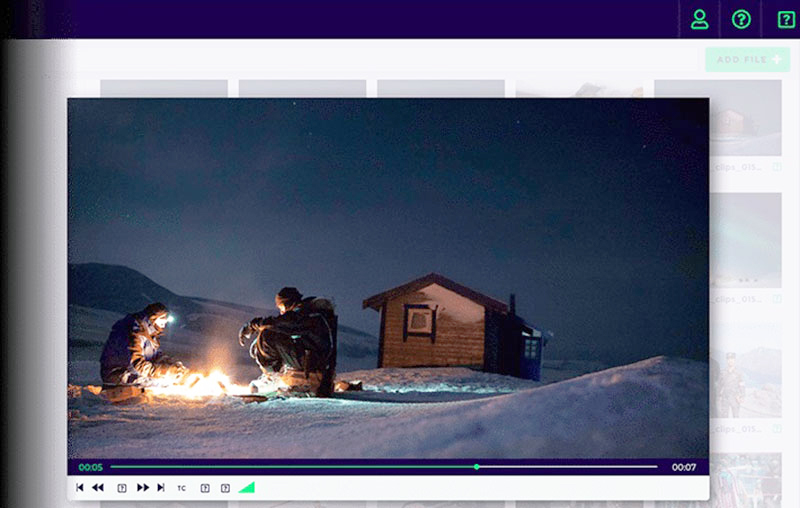
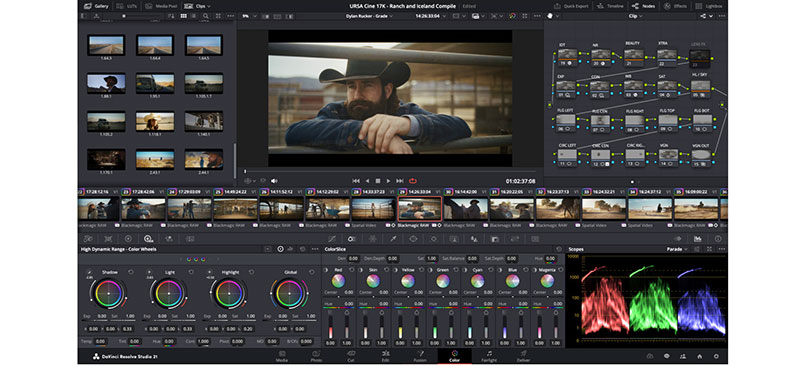
The dedicated Framelight X Player services handle clip previews, QC, production and transmission by playing back media frame-accurately with the same speed and capability of a local player. This feature makes every asset proxy, and up to 64 audio tracks, instantly available in real-time. Native GV HTML5 graphics, animated and template-driven, are also available and can now be added to a new GFX timeline.
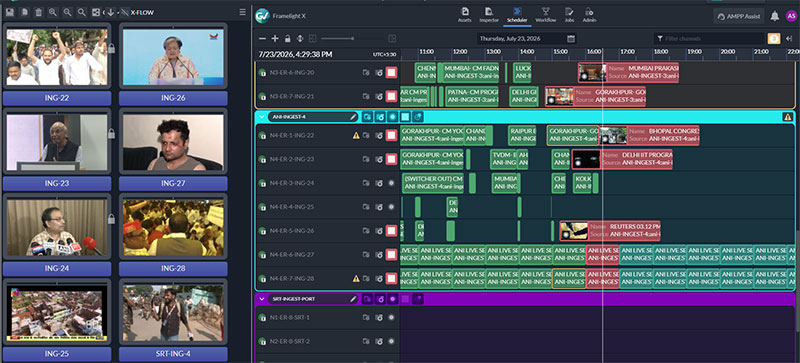
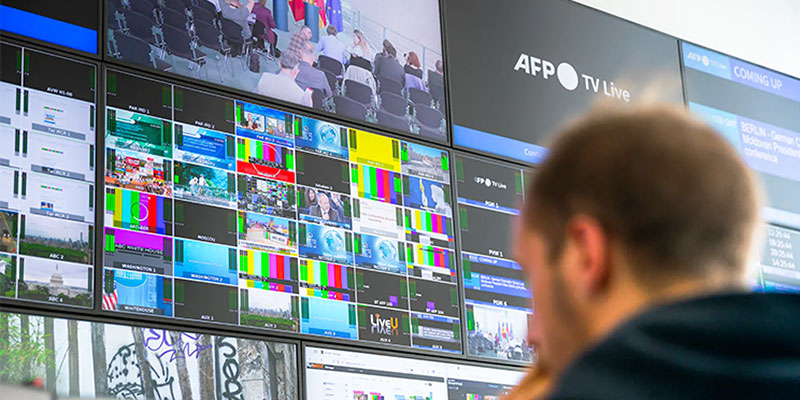
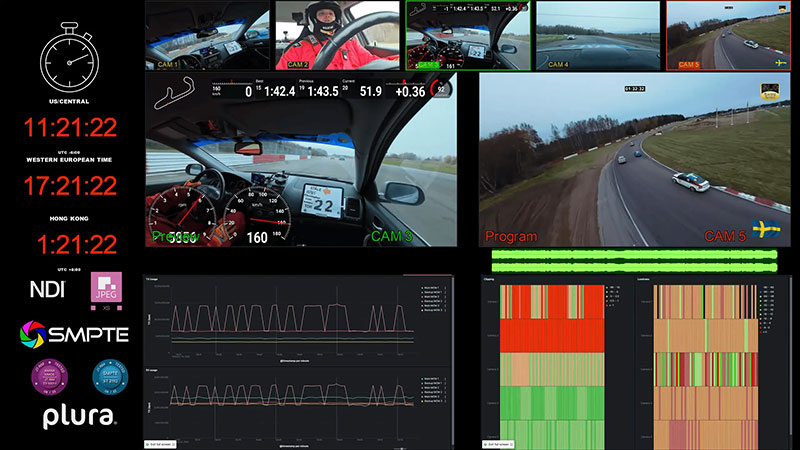
Flow monitoring gives operators real-time visibility of source presence, signal health, recording status and storage usage – an important function considering the platform’s focus on elasticity and scale. Typically, an organisation needs to build out its production facility for peak demand, which may leave a large portion of its production capacity unused much of the time. Instead, Framelight X itself does the scaling – on premises or in the cloud – making it unnecessary to invest permanently for busy periods.
From Ingest to Distribution
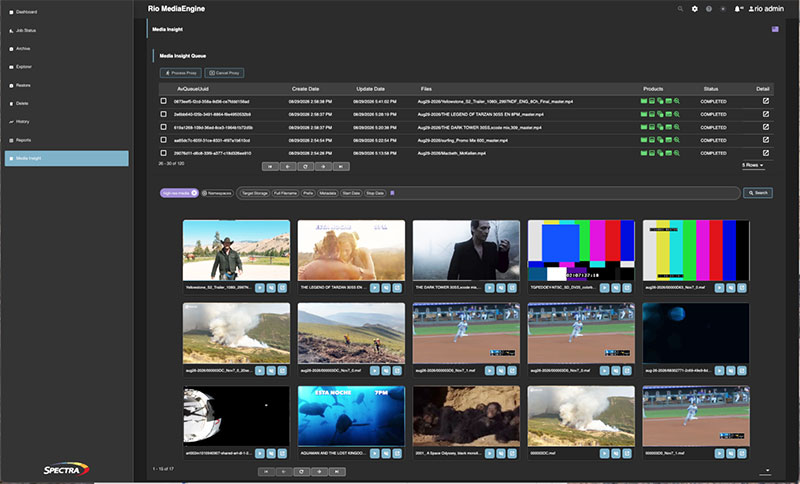
Framelight X gives ANI’s editorial staff access to media search, proxy preview, metadata inspection and content validation applications through their browsers. Once a recording is complete, automated workflows transfer it into ANI’s central library and make it available for editing, archive and playout, including Adobe and EDIUS editing environments.
A Workflow Engine, script services and S3 Transfer handle highlight creation, MP4 processing, S3 delivery and social media preparation. During breaking news, ANI can record and monitor multiple live feeds and make captured material available for editorial review, clipping and distribution. Retention, proxy regeneration and asset deletion are also automated, reducing the manual handling needed as media moves through the system.
The Framelight X workflow engine automates the repetitive tasks required for ingest, metadata tagging and distribution. Thus, automation leaves more creative resources available. Users can design and customise workflows through a straightforward interface, using tools such as logical operators, transcoding and AI integrations for transcription.
Users can also record a voiceover directly to Framelight X’s editor UI to sync the script with the video. This customisation type of automation enables broadcasters to adapt workflows to their specific production, and scale to meet fluctuations in demand.
Local Processing with Cloud Orchestration
Time-critical media processing remains on ANI’s four local nodes, AMPP meanwhile handles cloud-based orchestration and application management. Shared storage connects ingest, library, editing, archive, playout and transcoding, alongside ANI’s existing routing and monitoring infrastructure.
“The scale at which ANI operates makes speed, reliability and visibility critical across the content lifecycle,” said Evan Boyd, Senior Vice President of Sales, APAC, Grass Valley. “This deployment combines AMPP cloud orchestration with local media processing to manage high-density ingest and automate the movement of content into editorial, broadcast and digital workflows. It gives ANI a scalable software-defined platform that can continue to develop with its news operations.”
ANI now has a common platform for scheduled ingest, monitoring, media management and multi-destination delivery, with the flexibility to add applications and workflows as its requirements change. www.grassvalley.com