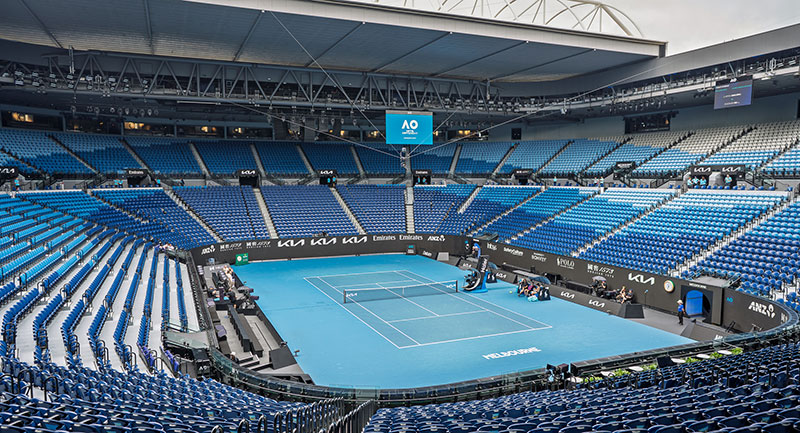


Gravity served as Host Broadcast provider at the Australian Open with a top international team, broadcast and production infrastructure, managed on a massive IP-based routing environment.
The 2026 Australian Open, held 18 January - 1 February, marked the 12th year of the broadcast and technology partnership between Gravity Media and Tennis Australia, and the 22nd year that Gravity Media has supplied host broadcast technical facilities for the Australian Open.
A dedicated team of 75 specialists from Australia, the UK, the Netherlands, Belgium and Germany custom-designed, deployed and operated the broadcast compound to deliver the Australian Open 2026, held at Melbourne Park. Alongside this international broadcast facility ran a large-scale IP production environment. Together, the combined infrastructure formed the technical backbone for Tennis Australia's creative, editorial and operational delivery of the tournament to worldwide audiences.
At Melbourne Park Tournament Precinct
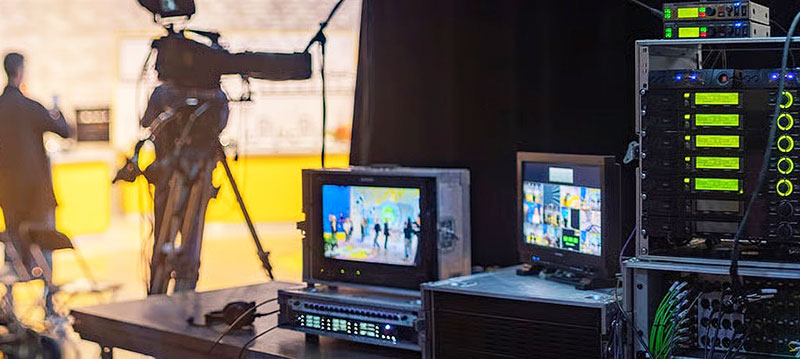
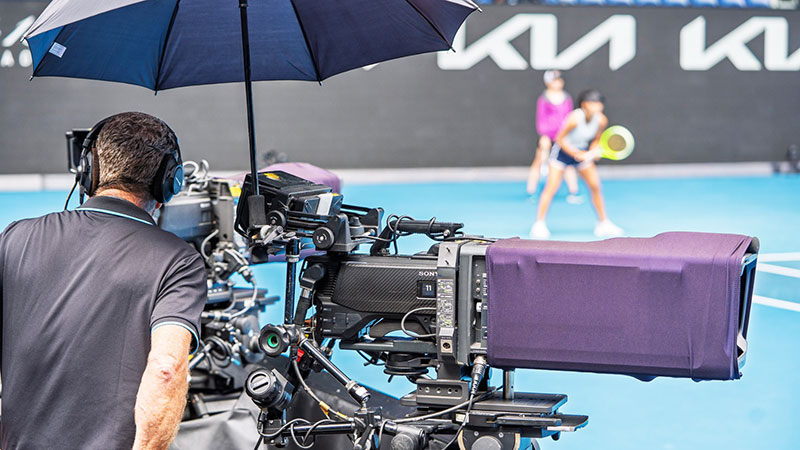
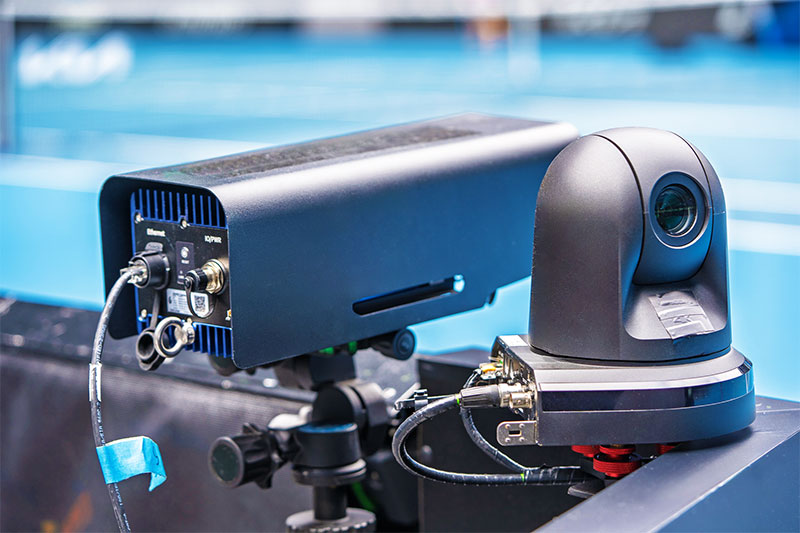
The project involved managing over 100 tonnes of fly-away infrastructure and more than 150 broadcast cameras. Among them were Sony HDC 3500 / 5500 models with super slow-motion and ultra-motion camera channels. Across the Melbourne Park tournament precinct, 172 camera sources captured every match and surrounding activity including a Spidercam rigged above centre court, 22 roving RF cameras and two remote RF robotic cameras delivering mobile and panoramic views across the venue.
An extensive RF and communications network supported and connected operations throughout the site, with 48 Riedel Bolero antenna positions set up to run 150 belt pack transmitters for presenters, production staff and rights holders.
Production galleries and audio control rooms were installed at Tennis Australia's headquarters at Melbourne Park, which was connected via 500m of fibre and dual 700GB data links to the central equipment room at the broadcast compound.
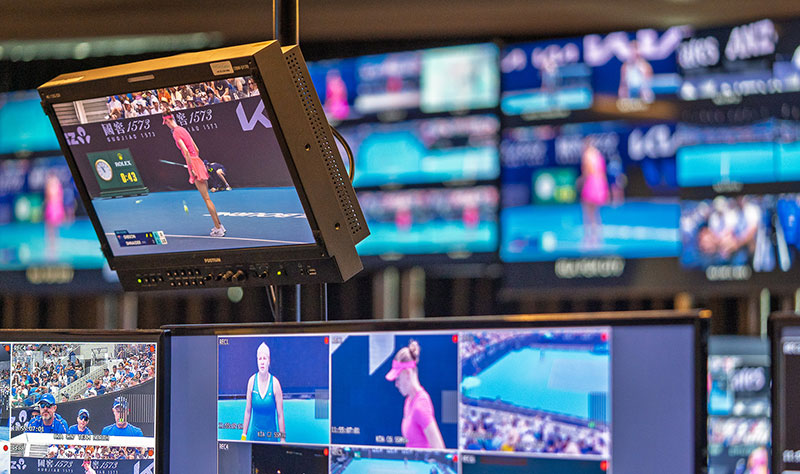
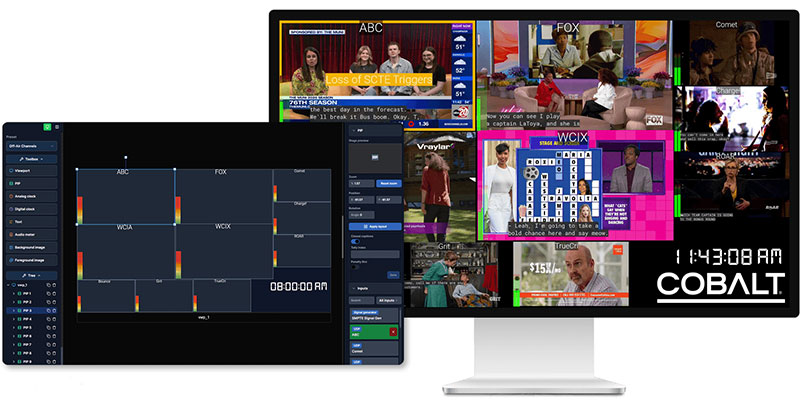
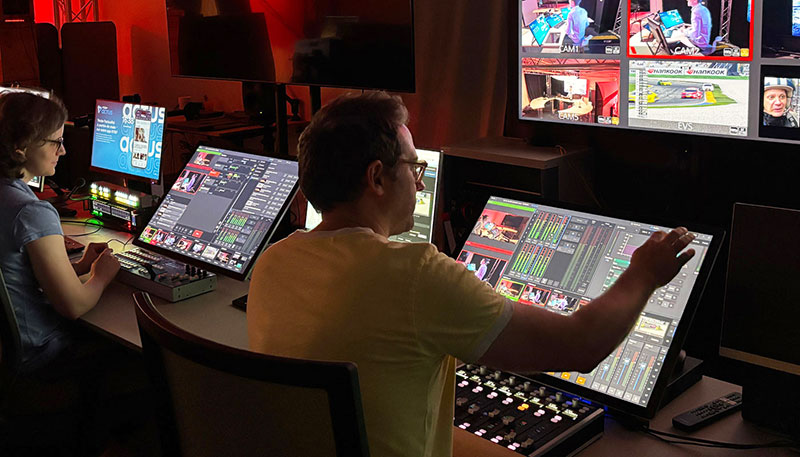
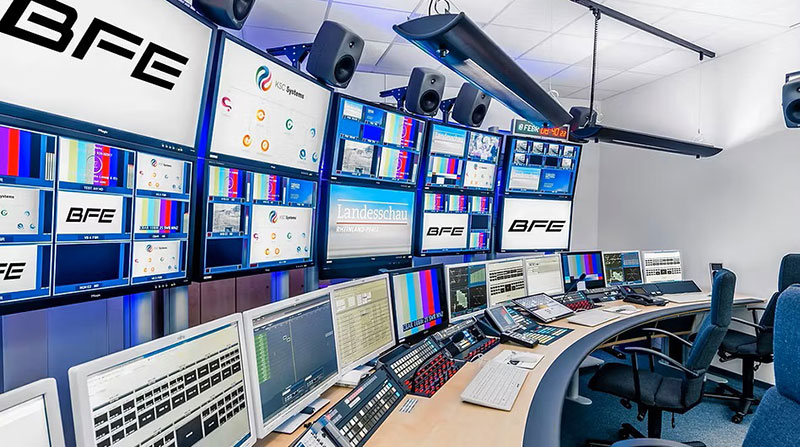
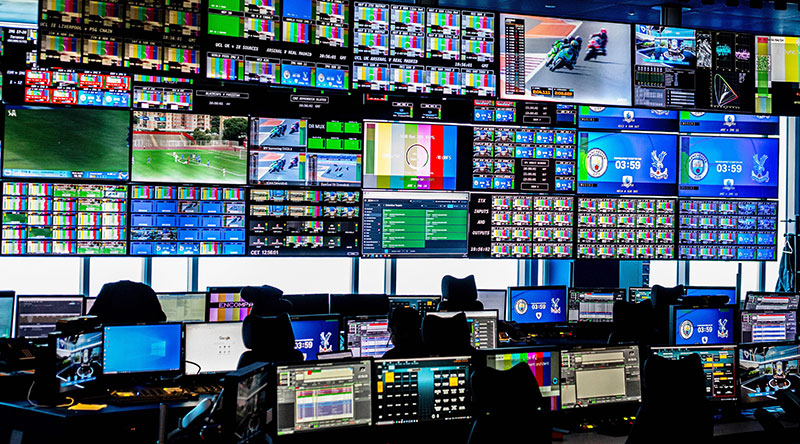
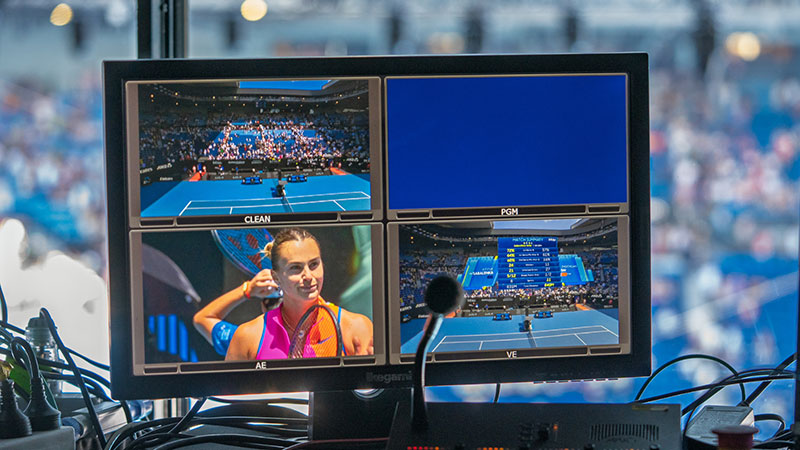
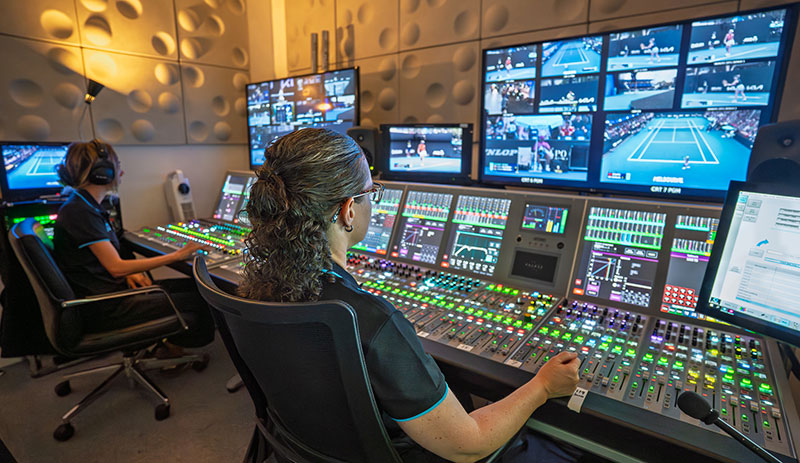
The facilities comprised 10 production galleries, nine audio control rooms and 11 SimplyLive ViBox all-in-one production systems covering the outside courts. In total, the environment supported over 130 operating positions and more than 150 multiviewers, displaying around 1,700 picture-in-picture sources. Another aspect of the 2026 deployment was Gravity Media’s refresh of the technical furniture across the production facilities, replacing workstations that had been in service for more than a decade while maintaining the established layouts they had developed with Tennis Australia.
IP-based Routing Architecture
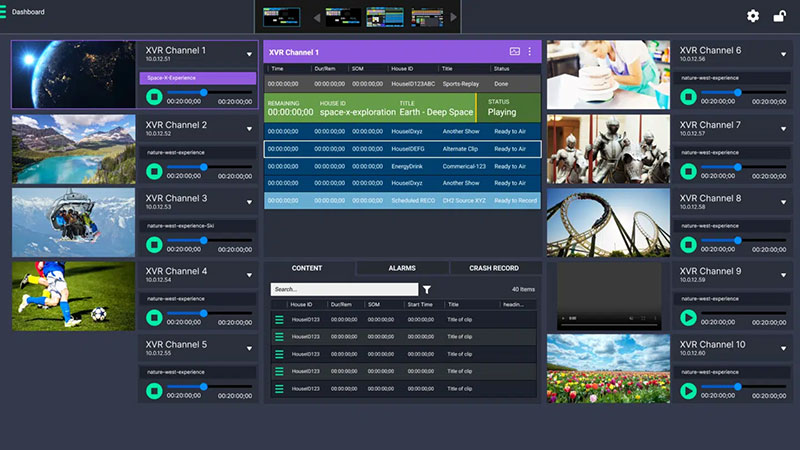
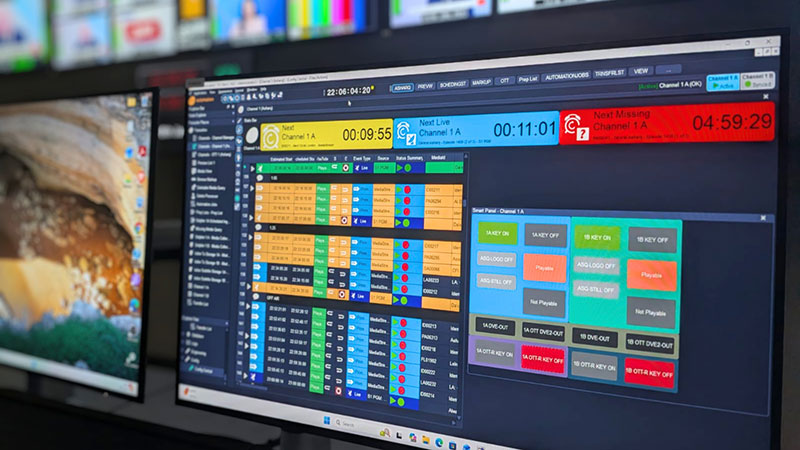
Signal routing was managed through a very large IP and baseband system that served as a 4,000 x 4,000 routing environment, while over 2,500 audio signals were handled through a hybrid live audio solution using a Calrec console. This fully IP-based architecture enabled the integration of live match coverage, highlights production and digital content workflows.
Gravity’s Technical Lead described this system in some detail. “From a hardware and infrastructure perspective, the system was built around a pair of Cisco monolith switches, combined with approximately 14 IP edge nodes to bridge between the IP and baseband video domains,” he said. “This formed a large scale, decentralised routing environment, with nodes distributed across the central equipment room and extending into the Tennis Australia galleries via high-capacity fibre links, in the order of 700 Gb. A dedicated control network sat on top, enabling orchestration, monitoring and dynamic system management.
“In terms of workflow integration, the IP architecture allowed signals to be transported, processed and made available anywhere on the network without the physical constraints of traditional routing. This enabled a far more flexible and responsive environment, where resources could be allocated and reconfigured rapidly as production requirements evolved across live, highlights and offline workflows.”
Scale, Speed and Flexibility
He talked through the advantages of being able to integrate these parts of the project – match coverage, highlights and digital content production. “Primarily, it gave us greater efficiency, speed and flexibility, which resulted in faster turnaround of content and better use of shared resources,” he noted. “It also allowed the production to scale effectively across different stages of the tournament.
“Trying to achieve this level of integration without an IP connected system would be significantly more challenging. While a purely SDI based approach at this scale is technically possible, it would require multiple large video matrices linked together to match the I O capacity, along with additional processing layers to replicate functionality that is native within the IP domain.”
Thinking over an equivalent SDI system in terms of resource and cost, he said, “An SDI approach would have required substantially more hardware, significantly more cabling, and a higher logistical burden in terms of freight and installation. Patching and signal management would be much more complex, limiting the ability to decentralise the system. The IP approach reduced the overall physical footprint, improved flexibility and enabled more efficient use of both personnel and infrastructure, although it required a higher level of engineering expertise."
Preceding Tournaments
In the lead-up to the Australian Open, Gravity Media delivered broadcast and technical facilities for Australia’s United Cup tennis tournament, held 2 – 11 January in Perth and Sydney, as well as the Brisbane International (4 – 11 January) and Adelaide International (12 – 17 January).
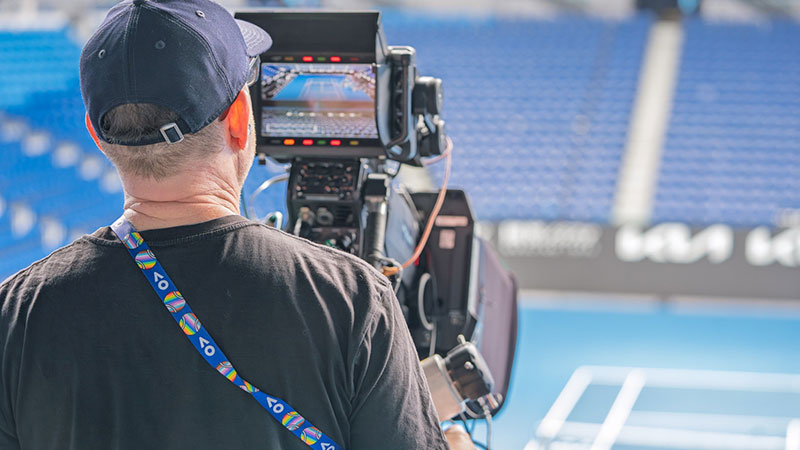
For the United Cup, the requirements here were demanding and specific. Gravity Media supplied OB production trucks and facilities in each city, giving operators access to material from 28 cameras, multiple EVS replay and edit suites and Livetools wireless TV production equipment for the teams and players to use. Further custom-built fly-away production systems were implemented in Sydney so that Tennis Australia could integrate coverage from multiple cities into a fully produced world feed for delivery across international broadcast and subscription platforms.
The Adelaide International and Brisbane International were also supported with OB trucks, using 22 cameras across each site to deliver dedicated HD coverage for Tennis Australia and its domestic and international broadcast partners.
Across the 15-day tournament, Gravity Media delivered more than 200 hours of coverage to international and domestic rights holders, including Nine Network in Australia, ESPN, Eurosport, CCTV, and Japan’s WOWOW. Further to its role as host broadcast technical partner, Gravity Media continued to support its broadcast partners - which also include ESPN and Eurosport - with production and technology services for their Australian Open coverage. www.gravitymedia.com