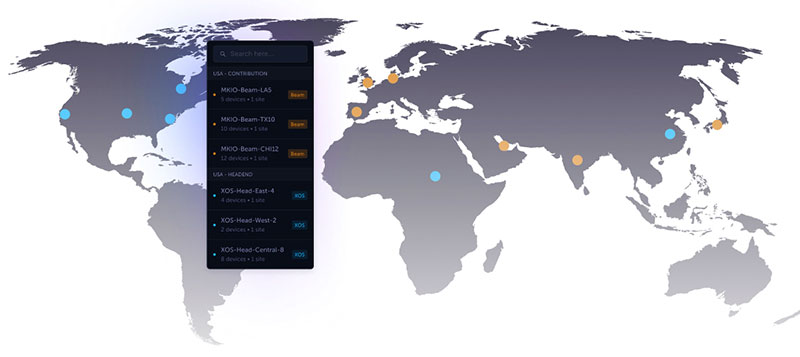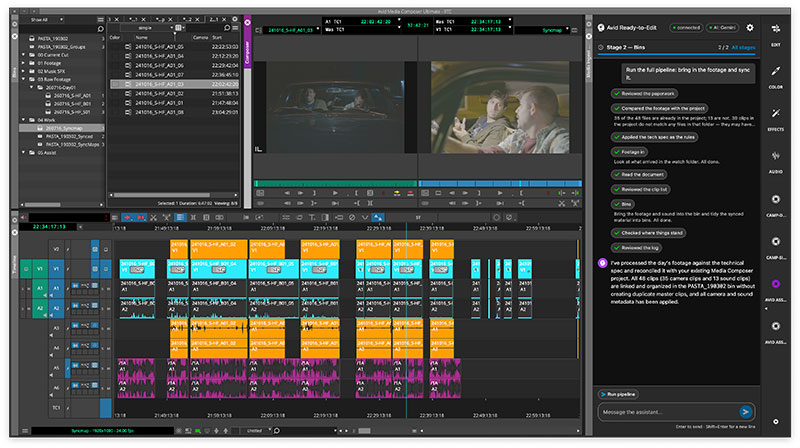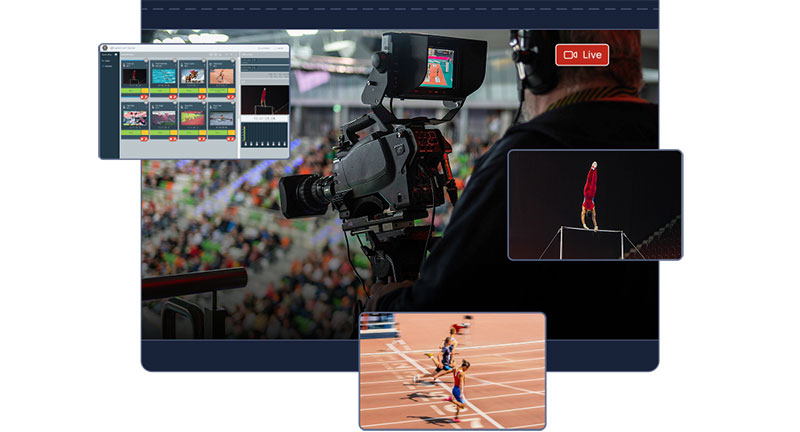


EVS’s orchestration expertise combined with the Matrox ORIGIN software-defined media framework helps broadcasters build more flexible, resource-driven production environments.
EVS and Matrox Video have combined their expertise to accelerate the industry's transition to software-defined live production. Aligned with the European Broadcasting Union's (EBU) Dynamic Media Facility (DMF) initiative, the collaboration pairs EVS's orchestration and workflow management capabilities with Matrox ORIGIN’s software-defined media transport and processing to help broadcasters build more flexible, resource-driven production environments.
As broadcasters move beyond fixed infrastructure models, they need the ability to deploy, manage and scale production resources dynamically, according to changing operational demands. Together, EVS and Matrox Video aim to help simplify that transition by combining complementary technologies that enable more adaptable, efficient and software-defined production workflows.
Beyond Fixed Infrastructure
DMF architectures enable production resources to be provisioned and assigned according to operational needs rather than permanently tied to individual workflows or dedicated hardware.
Matrox ORIGIN gives EVS a software-defined media processing foundation designed to run broadcast workloads on standard compute infrastructure, while supporting open, interoperable approaches including the EBU’s Media eXchange Layer (MXL) and IPMX. Its scalable architecture allows media processing resources to be deployed and allocated dynamically, aligning closely with the resource-driven principles of the DMF.

As an OEM building on Matrox ORIGIN, EVS can focus its engineering investment on the orchestration, automation and operational layers where the company specialises in delivering differentiated value to broadcasters.
These layers are where broadcasters can align infrastructure resources with evolving production requirements. Through Production Resource Manager (PRM), a key component of EVS's Flexible Control Room solution, processing resources can be dynamically deployed, configured and reconfigured based on the specific needs of each production. PRM identifies and manages system resources, operator roles and equipment configurations during live production.
The Flexible Control Room helps users avoid the limitations of fixed control rooms by acting as a dynamic, scalable workspace tailored to both live and on-demand content production. With its open architecture, it can control EVS and third-party devices, simplify complex operations and give extreme scalability. As well as using infrastructure more efficiently and gaining operational agility, organisations can reduce total cost of ownership.
Inside the Control Room
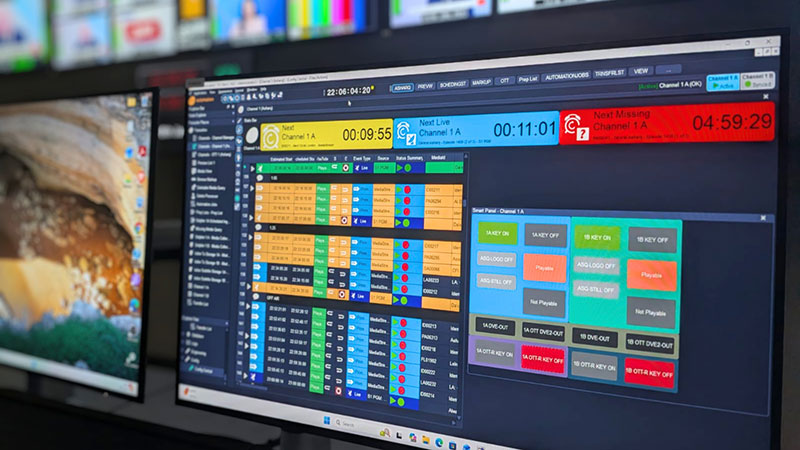
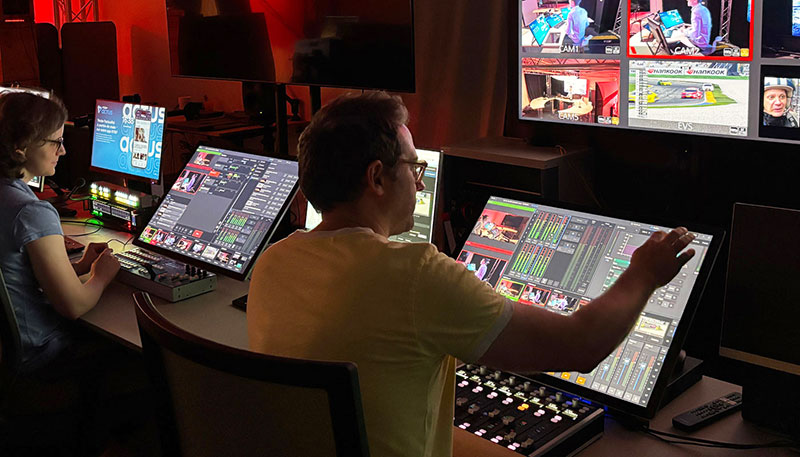
Complementing this approach, EVS Tactiq, a modular interface for operators that unifies the control of core control room production elements such as video, audio, graphics and lighting, abstracts the complexity of the underlying technology stack. Operators can focus on producing content rather than managing infrastructure. In parallel, the EVS Cerebrum control and monitoring system presents a simpler, unified control layer for engineering and operations teams across SDI, IP, on-premises and cloud environments.
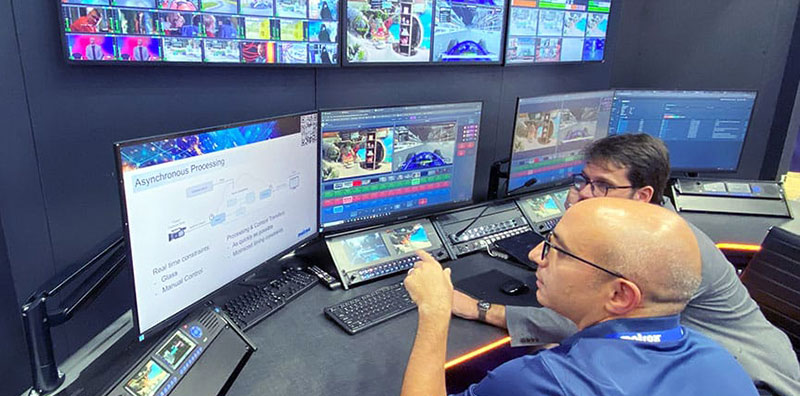
“Broadcasters are looking for ways to make their production infrastructure more flexible and responsive to changing operational requirements," said Dieter Backx, VP of Control & Orchestration at EVS. "Our relationship with Matrox Video brings together complementary expertise in orchestration and software-defined media transport and processing, helping us advance the DMF vision and explore new possibilities for more agile production environments.”
"Matrox Video wants to allow broadcasters the freedom to build media systems for purpose, without confining them to proprietary technology choices," said Alberto Cieri, Senior VP of Sales and Marketing at Matrox Video. "Matrox ORIGIN's software-defined media framework enables broadcasters to realise the DMF vision now. From there, we are working with EVS to make it easier to deploy the flexible, resource-driven production environments the industry has been working toward."
The companies will continue collaborating on technologies that advance the transition toward more dynamic, scalable, software-defined production infrastructure. So far, EVS' Cerebrum broadcast control and orchestration platform integrates with Matrox Video's Avio 2 IP KVM extenders and ConvertIP baseband to IP converters and encoders/decoders, with the intention of centralising control and routing across IP-based production environments. evs.com video.matrox.com