

New joint workflow writes on-set metadata directly into files, preserving lens, colour and framing decisions through each copy, move and archive tier, with natural language searchability
On-Set Dailies
Qumulo and Colorfront have formed a strategic collaboration to solve one of post-production’s most persistent and expensive challenges – data created on-set associated with shot recording and equipment specifications almost never survive the journey to the people who need it in post production. The two companies previewed their joint work during IBC 2026, 11–14 September, Amsterdam.
Losing Production History
Every frame shot on a modern production is recorded with a substantial body of metadata, such as camera make and model, sensor mode, resolution and frame rate. Beyond those essentials, systems also capture lens specifications, focal length, aperture, focus distance, timecode, reel and scene identifiers, colour intent as ASC CDL values and LUTs, framing intent, sound roll and sync points, script supervisor notes, circle takes, VFX flags - and so on. The list of specifications grows and evolves continuously as new technologies emerge.
Traditionally, very little of this information reaches the teams downstream who are responsible for processing the content, until now.
The information is fragmented across camera-original headers, sidecar files, ALEs, EDLs, spreadsheets and a colourist’s local project database. Each hand-off (set to dailies, dailies to editorial, editorial to VFX, VFX to finishing) is an opportunity for the loss of important metadata, flattened into a filename, or transcribed by hand. By the time an assistant editor asks for ‘the handheld night exteriors on the 32mm, the ones the DP circled’, the answer requires scrubbing through hours of material.
The True Value of Metadata
In other words, losing the metadata results in production delay. The costs are difficult to calculate, but imagine 20 artists working on a project overnight. If each artist takes 15 to 20 minutes of an assistant’s time whenever they need a frame, and makes such a request two times per hour on average, then somewhere between 10 and 13 hours per night are wasted. Over the course of a year, across multiple production pipelines, a studio may bleed substantial funds in this inefficiency alone before factoring in the rework required if the assistant pulls the wrong files.
Transkoder
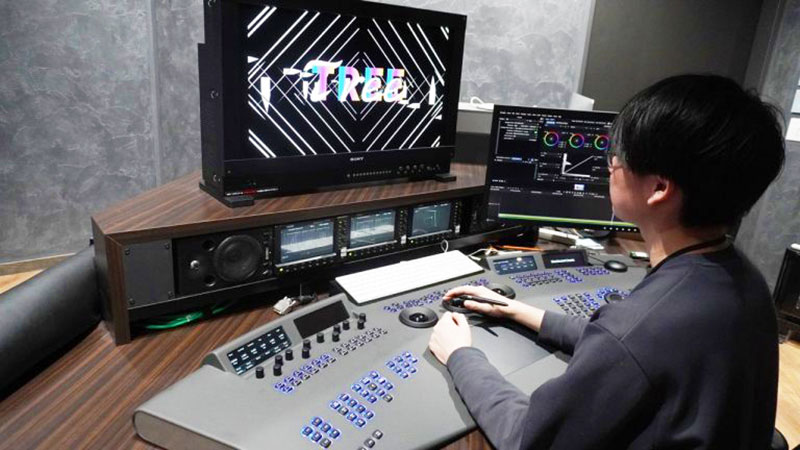
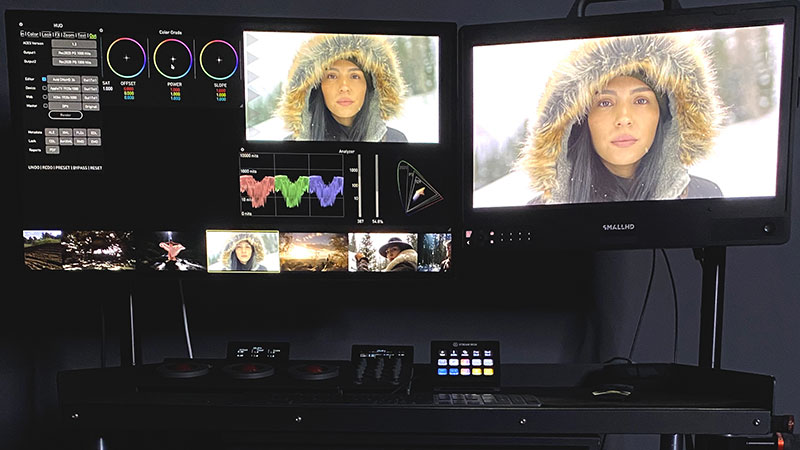
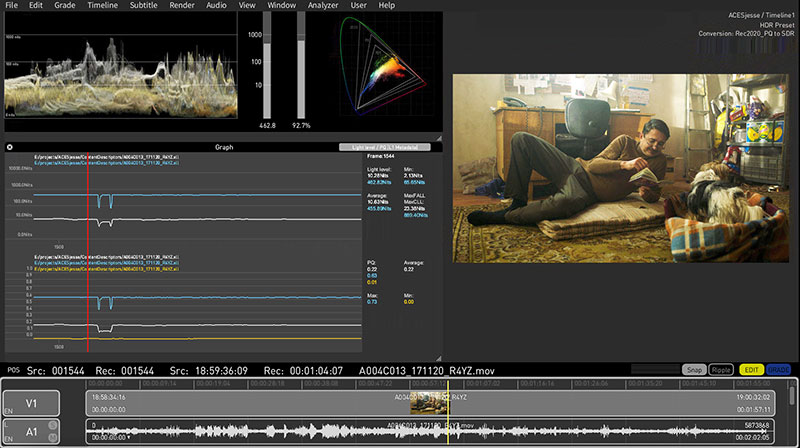
The collaboration joins two sets of functionality that each solve half the problem. Colorfront Transkoder and On-Set Dailies operate during recording, at the point in the pipeline where metadata is the most dense. These tools ingest original material from cameras and read what has been recorded.
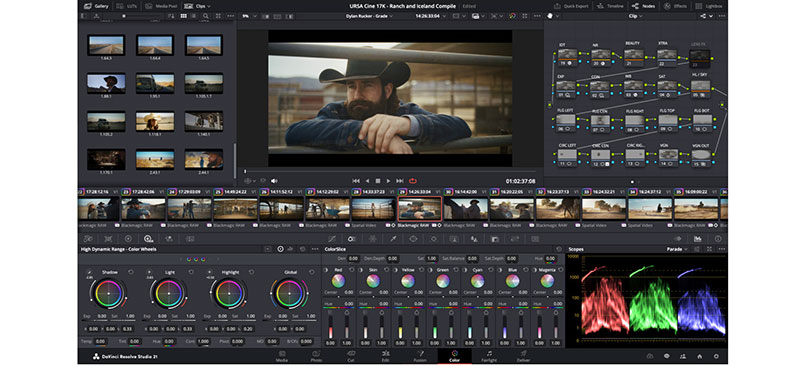
The software then adds considerably more information during processing when colour transforms and ACES pipelines are applied, ASC CDL and LUT decisions, HDR and Dolby Vision metadata, framing decisions and audio sync. In Transkoder/On-Set Dailies 2026, AI-derived information is added, which includes text detection and automated quality-control results such as clipped highlights, crushed blacks and judder.
Preventing Loss
At this stage in the process, Colorfront’s expanded metadata is normally written into deliverables and sidecars, but its usefulness begins to decay from that point forward. To address this issue, Colorfront chose to collaborate with Qumulo in order to opdate the workflow at the file-layer itself. Instead of emitting metadata to a sidecar that can be separated from the picture, Transkoder now writes and derives the data it discovers into Qumulo user metadata, attaching it to the file object through the Qumulo Core REST API.
The Qumulo Data Platform includes Qumulo NeuralSearch, storage-native search functionality. It indexes file metadata continuously as the data is recorded – with no external crawler and no separate search infrastructure – and answers SQL, natural-language and semantic queries directly against the filesystem. The Qumulo indexer lifts the metadata values into typed, queryable columns as part of its normal indexing pass.
Qumulo CEO Douglas Gourlay said, “Colorfront sits where the richest metadata in the entire pipeline is created and expanded. Making that information a durable property of the file, indexed and searchable from the moment it lands, changes what a storage platform is for. The picture stops being an opaque object you have to open to understand.”
Using Colorfront + Qumulo, metadata is packaged as a property of the media, carried by the filesystem, surviving every copy, move and tier transition, and remaining searchable from the moment it is written. This approach immediately saves many hours of work every day.

Using What You Know – Made Easy
In practice, once the metadata is resident on the file and indexed, retrieval is no longer a browsing issue but becomes a query. For example, to instantly generate dailies, the query ‘Everything from B-camera on day 14 with the DP’s circle-take flag’ resolves to a selection in a few seconds rather than several hours of assembly.
Or, for VFX pulls, prompting for ‘All shots on the 32mm with the green-screen flag, at 4K or above, that have not been pulled yet’ returns not just the plates but the colour transforms and framing metadata the vendor needs alongside them. That is, the pull arrives complete rather than as a list of filenames a coordinator then has to chase. At conform and finish time, shots may be located by the colour and framing decisions recorded against them, rather than by reconstructing intent from an EDL and a folder structure.
Later on when searching for content for archive and reuse, material from a production that wrapped two years ago is as discoverable as material shot today because the searchable information is attached to the frames rather than to a project file that has since been archived or superseded, or possibly corrupted.
“Transkoder has always known a great deal about every frame it touches, what the camera recorded, what the colourist decided, how the shot is meant to be framed and graded,” said Mark Jaszberenyi, Chief Executive Officer, Colorfront. “Until now most of that knowledge stopped being useful the moment the render finished. Writing it to the file on Qumulo, where it can be searched in plain language, means the work our software does on-set keeps paying off through editorial, VFX and finishing, and long into the archive.”
At IBC, Qumulo and Colorfront previewed the workflow end-to-end, starting with metadata originating on-set, expanded by On-Set Dailies and Transkoder during processing, written to the file on Qumulo, and retrieved through NeuralSearch’s natural-language interface, including inside Adobe Premiere Pro, through a NeuralSearch panel that lets an editor find and load a shot without leaving the timeline.
The joint workflow is in active development. Meanwhile, Colorfront Transkoder/On-Set Dailies 2026 is available now from Colorfront. colorfront.com