
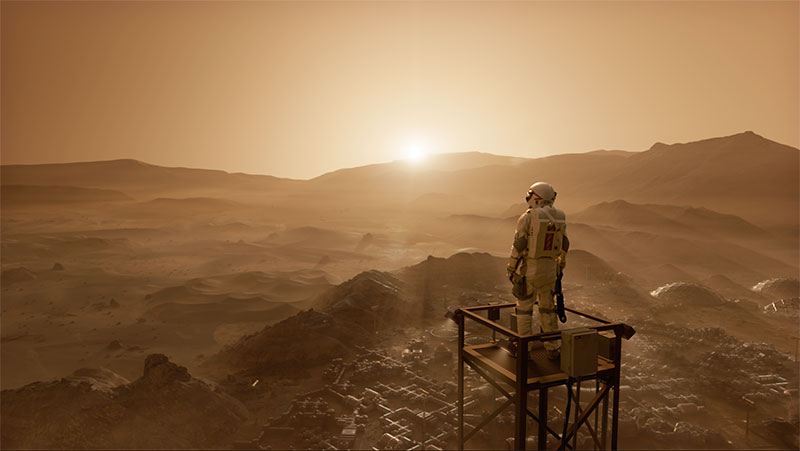
DNEG recently delivered 338 shots for Season 5 of Apple TV’s ‘For All Mankind, handling the complex built environments, desert landscapes and harsh Martian light and atmosphere.
For All Mankind is a science fiction drama and web television series made for Apple TV. It features an alternate history in which the Soviet Union landed on the Moon ahead of the USA, in a world where the Space Race continues to this day.
DNEG worked on Season 4 of the show and, most recently, has delivered 338 shots for Season 5. Since this new series takes place several years after the fourth season’s events, DNEG’s primary goal was to represent the evolution of the Martian base that had occurred in the meantime. Benjamin Ruiz, Environment Supervisor at DNEG, talked to Digital Media World about the work his team achieved.
Back to Happy Valley
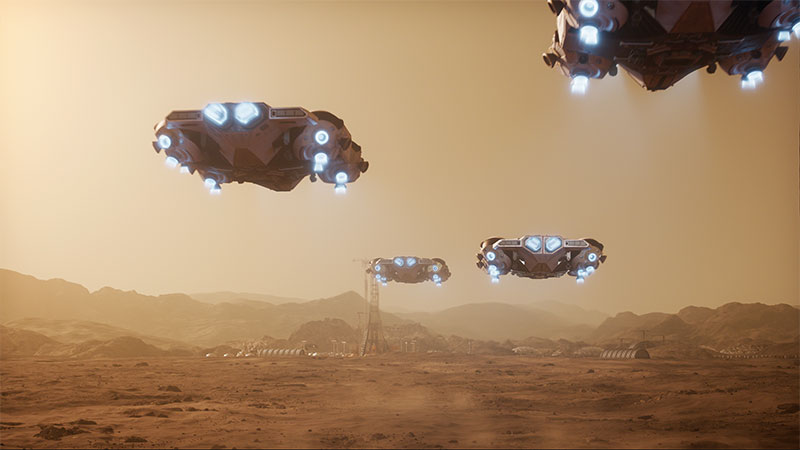
DNEG built on their Season 4 work in the major Happy Valley environment – a colony of the story’s Mars-6 Alliance of nations – and expanded the Martian world to reflect the passage of time. The team took the existing Happy Valley environment and enlarged it by 2 to 3 times, while also developing new surrounding Mars landscapes and introducing a new ISN (Independent Spacefaring Nations) base located on a separate region of the planet. ISN is a coalition of nations functioning outside the Mars-6 Alliance.
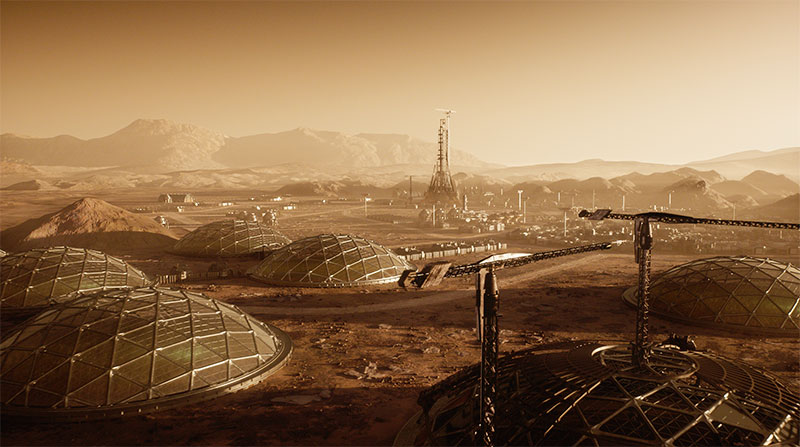
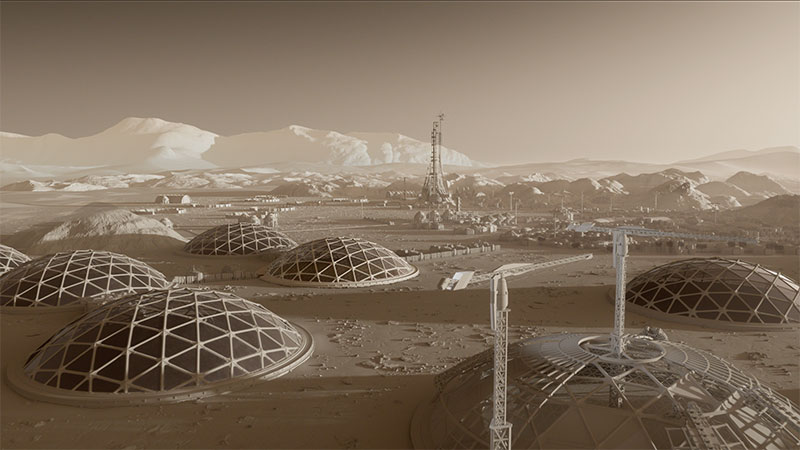
DNEG worked on a wide range of different shots, from establishers shot from above that were intended to show the full environment, to ground-level shots following vehicles and other spacecraft, and a selection of close-ups.
These environments feature prominently across establishing shots, as well as the expanded Mars city and base that had been introduced by the end of Season 4. As the production was concerned with continuity, DNEG paid careful attention to realistic building placement, evolving infrastructure, and showing how the environments interconnected. A vast overhead perspective, seen from a new Space Elevator still under construction, was included to show a city like those we have on Earth – a pioneer city with residential areas as well as commercial, agricultural and industrial areas.
Into the Sandbox
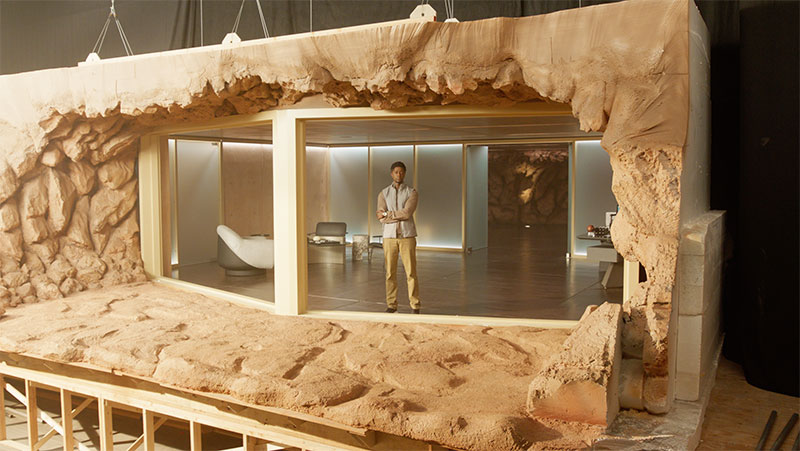
Most of the plates DNEG worked on were shot on an indoor set constructed as a sandbox, which formed a foundation for the Martian surface. This meant that one of the main challenges for CG and compositing was matching the small sand waves on the ground in the extended digital environments.
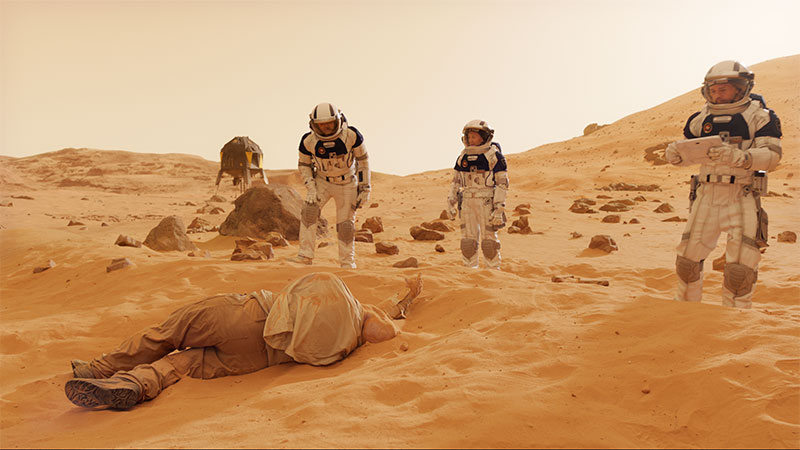
Throughout, they worked with full-CG assets as much as possible, and then enhanced specific elements with DMP touch-ups. Generally, all shots without a front-facing actor were full-CG. For the shots where an actor’s face was visible, they kept the on-set facial performance but replaced the actor’s body in CG to ensure their spacesuits and visors were correctly reflecting the digital landscape.
Although for the built Happy Valley environment, their starting point and main reference would always be the CG build they created for Season 4, the team also received a large number of both 2D and 3D concepts from the production. It then became their job to blend everything together, keeping the result as realistic as possible.
Hard Science
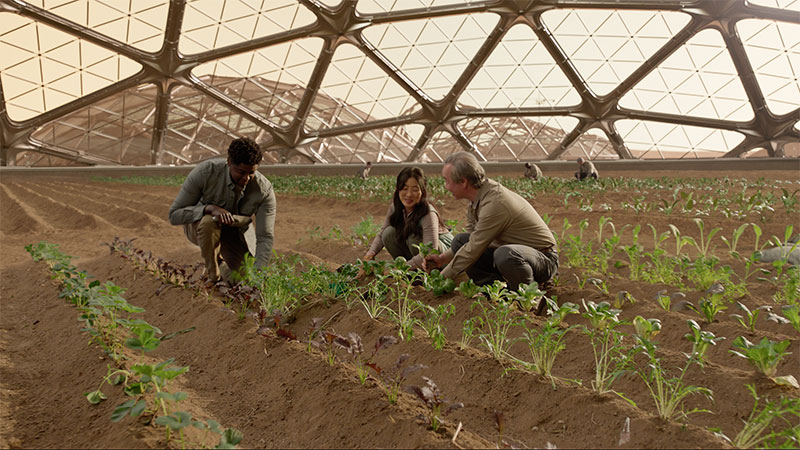
“For All Mankind is grounded in hard science, so we needed to stay within the constraints of what could be realistic for an operational base,” Benjamin said. “Some other parts, such as the mall constructed underground and the domes, were based on these concepts and then adapted to fit the story.”
Interestingly, as their work got underway, the team were undergoing an evolution of their own. “We were completely transitioning our internal pipeline from Clarisse iFX to Houdini/Renderman. Our goal was to stay as faithful as possible to the visuals we had created for Season 4, using all the same assets built for Happy Valley, while regenerating the full environment in Houdini before expanding and extending it.”
Lights and Atmosphere
The distinctive Martian light and atmosphere is continuously present. The exteriors always include sunlight and a dense dusty atmosphere, and feel quite realistic. The lighters also had night-time shots of the Happy Valley environment, which needed a more complex, subtle balance of lights from several different sources.
Lighting on set brought a further complication. “The lights were quite close to the actors, casting shadows that weren’t representative of how real sunlight behaves. We had to find the right balance of lights and shadows, and blend everything toward that consistent look.
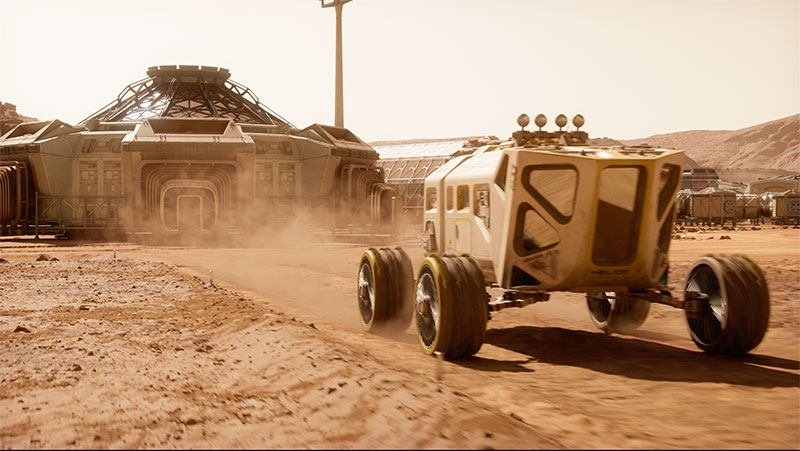
“We included controllers in each of the assets that required lights. The lighting team could then activate those when needed. Our atmospheric tool helped with installing the lights in a way that felt realistic, and then we added the FX dust where needed.
“FX dust really helped to convey the scale of the Mars environment for all of our outside shots, but especially at night. On Mars, because the exteriors are so dangerous, it was really important to make sure the audience felt that.”
Procedural Expansion
Their approach to expanding the environment to such a large extent was methodical and practical, similar to the way an engineer might work. In other words, they needed to create the base in a way that would work if it were being used in real-life.
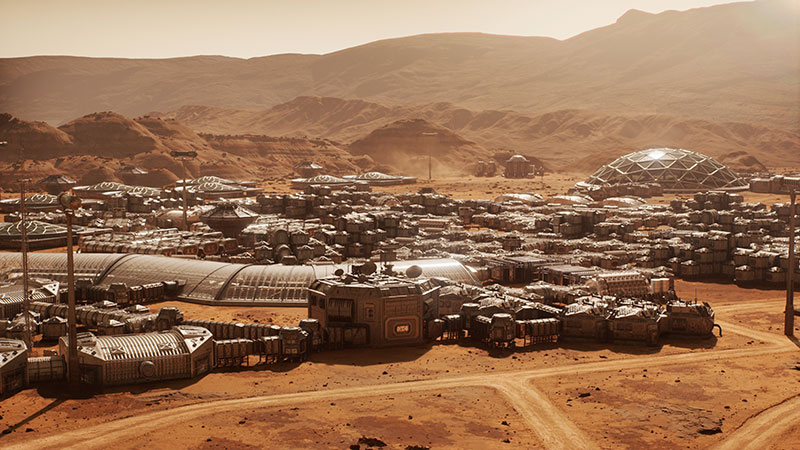
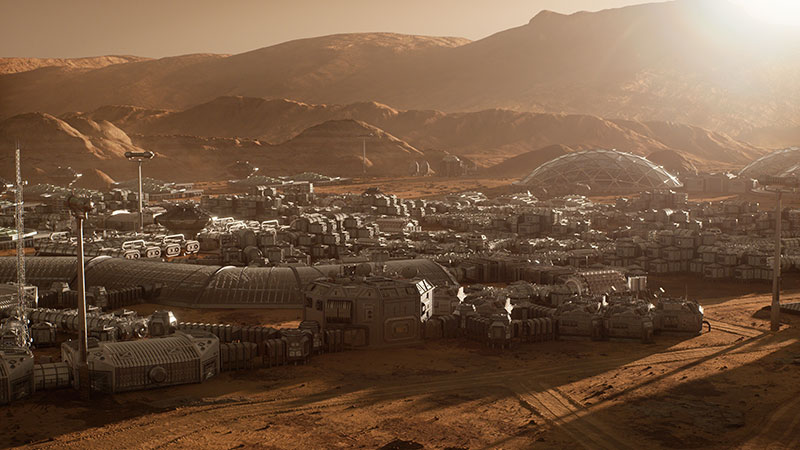
“We started by importing the Season 4 base – which we had a reference map for – and superimposed the extension on top of this. While the build team worked to update the buildings, the environment team were working in parallel on the ground, mapping in Houdini.
“We used a procedural setup that allowed us to move an entire road without having to resculpt anything. We took a lot of time on layout to ensure the buildings were positioned in a realistic way with no odd angles, and then added connection assets.”
Change Over Time
They needed to find a balance between using older assets and at the same time adding new ones. As the latest season takes place several years after the last one, some of the buildings needed to appear older and others needed to look as though they had been constructed more recently. They started by using the Season 4 modules, added placeholders for the newer buildings and then replaced those with newer assets as needed.
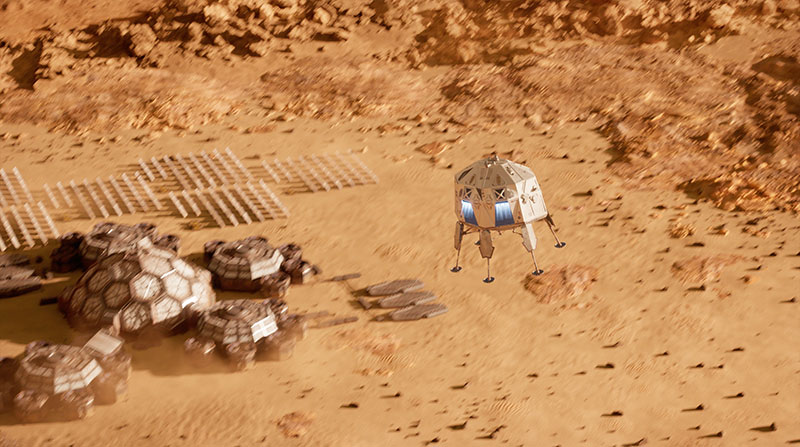
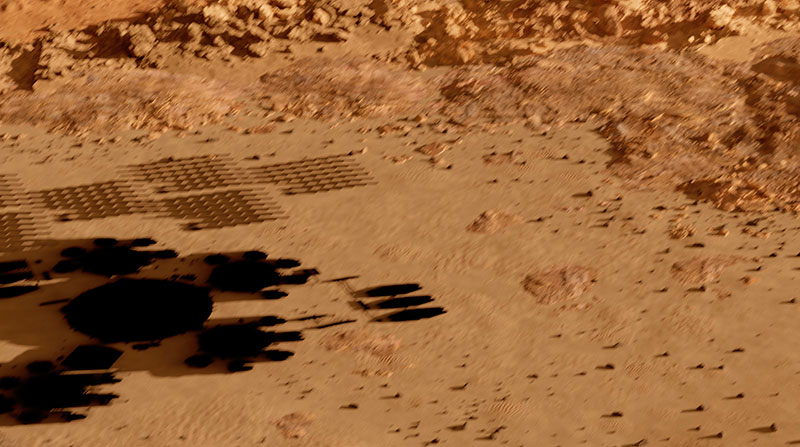
For the landscape the approach was somewhat different, as mountains would not have changed too much. They only needed to work on the ground surrounding the base, which had become more flattened and industrialised. As well as redirecting and extending roads, Houdini helped keep their processes as procedural as possible before resculpting or using DMPs.
Benjamin said, “In various areas, we made adjustments to show how the expansion of the base had caused physical changes over time. For example, if a building had existed in a certain place but had since been moved, the ground underneath would be less raw than in the surrounding landscape. We also added bigger sand patches around the older buildings and added more dust to them.”
Connections in an Open World
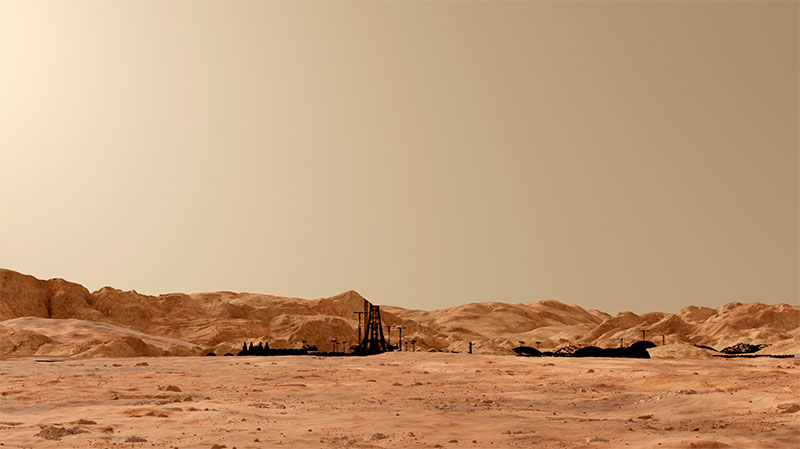
The new ISN base also had them thinking and building in a story-centric way. “We had the site map and also concept art from production, which we used to help inform the design of the new base and the surrounding landscape,” he said. “As we only had a few shots to show the distance between Happy Valley and the ISN base, we focused on a couple of places and designed the landscape specifically to show the scale. We had concepts to help guide the visuals for the valley that the ISN base is located in, and were able to use the same building assets as for the Happy Valley base.”
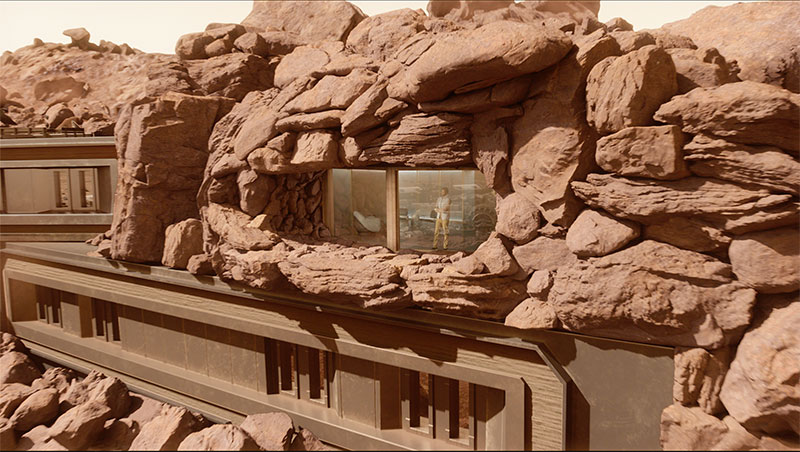
Nevertheless, they needed to consciously keep track of all areas relative to each other to avoid losing the audience as the camera angle shifted and the action moved from place to place across the very large, open Happy Valley terrain. “We had been modelling the environment as an open world for Season 4, as production wanted to be able to easily move cameras through the different buildings, so we continued with this approach for Season 5,” Benjamin noted. “All the connections seen in the wide shots help viewers understand, for example, where inside a building a close-up shot is being captured.
“Then, as the base is extended, the buildings get bigger with multiple floors, the domes and new landing pads are added, and we see the giant Space Elevator that’s under construction – all of which helps the audience understand which part of the base they are seeing in the shot.
“We built different versions of the full set so that when the plot dictated the need for a new building, for example, or a bigger spacecraft landing pad, we were able to redirect roads procedurally. We also created a version of the full set to use following the dome explosion.”
On the Surface of Mars
Defining the look and feel of being on the surface of Mars was quite interesting, and a key challenge. On one hand, Mars had to look like a believable planet, with geography and weather, but it also had to have an alien look, different to anywhere on Earth.
Benjamin felt that the team was lucky to have access to plenty of footage of NASA’s missions to Mars to use as a reference point. “The NASA footage was our main reference for scientific data, atmosphere and mood,” he said.
They also found that Mars landscapes are not so different to some found on Earth, and so used multiple photo references such as the Jordanian desert. “The Wadi Rum area is a very popular reference for desert-like planet environments, as it looks out of this world. I hope to see it with my own eyes at some point!” said Benjamin. “We also used imagery of the NASA Mars base in Arizona, which had been our starting point for Season 4, and LiDAR scans of the surrounding hills and landscape.
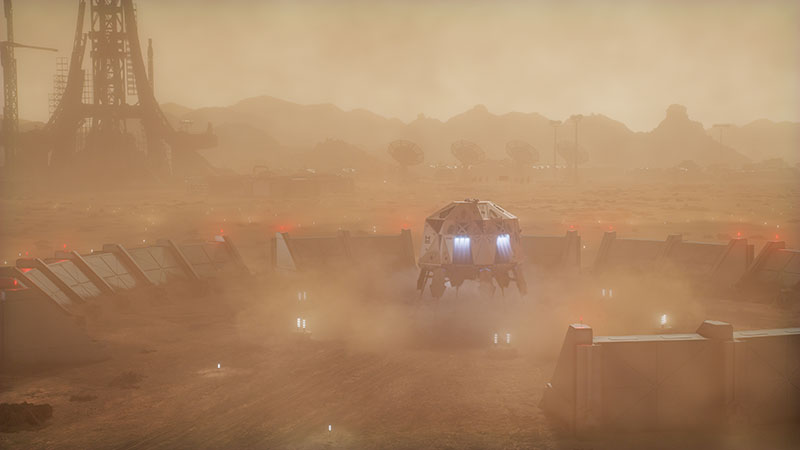
“The atmosphere was especially important. It's not made of the same components as on Earth, which causes the sunlight to travel differently and results in a greyish sky. We used an internal tool to simulate the atmosphere which creates a really heavy feeling. We then combined that with some nice dust FX blowing up from the ground and finished it in compositing.”
Korolev Crater
Korolev Crater is a distinctive, strange, beautiful environment that does exist on Mars and is visible on Google Earth, giving the team a small, blurred reference of the real crater. They also sourced references from Earth to simulate what an 80 kilometre wide crater should look like. “We discovered that it would contain a dome of ice at the bottom, in the shadows,” Benjamin said.
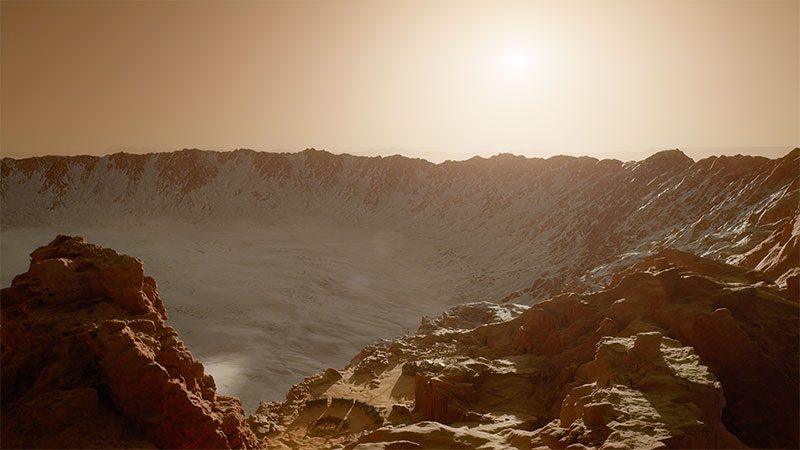
“The crater needed to be realistic and scientifically accurate. Again, we tried to stay as procedural as possible, adding more details to the path of the camera. For our wide shot, we started by placing the environment from Season 4 on top of our new crater to ensure accurate size and scale. Then the layout department designed the path of the camera from the full crater shot, to the close-up of the character. We added some interesting rock structures, as well as some facilities, beams and metallic cables that helped to show the scale.”
The right atmosphere was equally useful to show scale. They also created gigantic rock formations for the cliffs, about 2 kilometres high. “Because Korolev Crater is the result of an explosion that occurred a very long time ago,” said Benjamin, “it was important to show that the rock formations had also begun to erode over time, so we added extra details to some smaller sections to indicate that.” www.dneg.com
Words: Adriene Hurst, Editor
Images © 2026 Apple Inc.