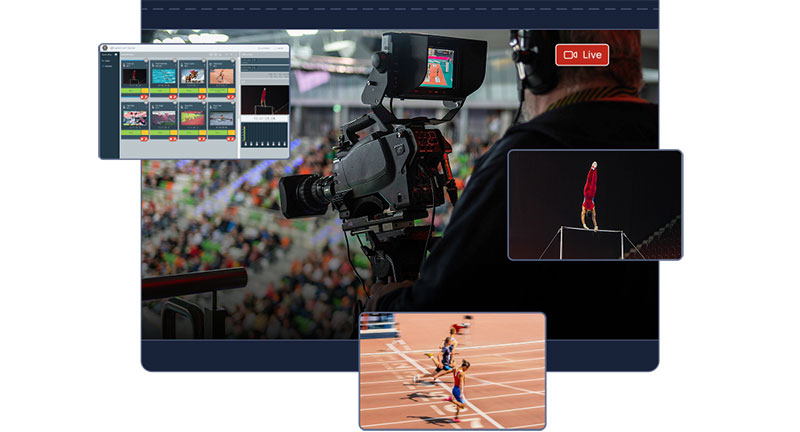


The VB330 and VB220 compressed monitoring probes can now play out TS stream files across IP networks, transforming the probes into more comprehensive broadcast assets.
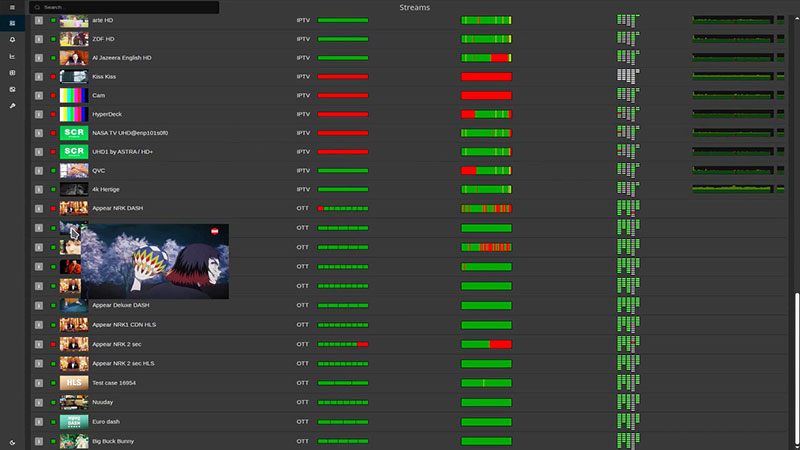
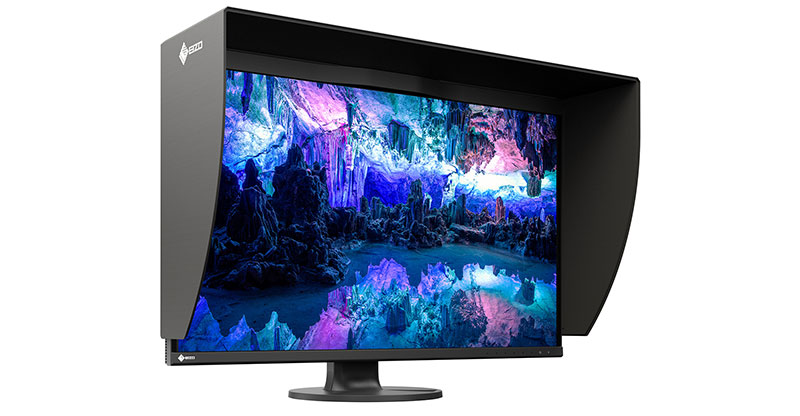
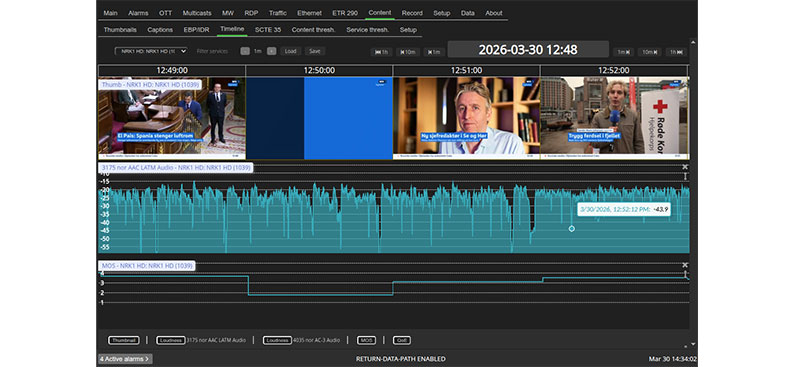
Bridge Technologies' VB330 monitoring probe
Bridge Technologies' VB330 and VB220 compressed monitoring probes are now able to play out transport stream (TS) files across IP networks. This new functionality transforms the probes from passive monitoring tools into more comprehensive broadcast assets that broadcasters can use to fulfill a range of regulatory and compliance activities that support operational and strategic decision making.
The TS playout feature builds on the probe’s existing recording capabilities, introduced last year. These included round-robin recording – where each engine independently records each stream to compare results – and alarm-triggered recording of up to 200 streams, with an inbuilt clip editor for export. The new TS playout feature expands on those developments by taking a recorded stream and playing it out to any TS receiver, supporting bitrates up to 100 Mbps per stream with up to 12 simultaneous playouts and a total throughput of 1 Gbps, or 2 Gbps with ST 2022-7 redundancy activated.
Variety of Workflows
The probes support both Single (SPTS) and Multiple (MPTS) Program Transport Streams, as well as both Constant Bit Rate (CBR) and Variable Bit Rate (VBR) files. Streams can be played once or set up to loop with adaptive handling to avoid continuity counter errors, and sent to either multicast or unicast destinations. For multicast delivery, the probe can also monitor its own output using its built-in analysis toolset. Files can be uploaded via the web interface, and the probe’s recordings used directly as playout sources.
For production engineers setting up networks for live events, TS playout makes the probes especially valuable in environments where speed is critical. For example, engineers can generate test content for live events before the cameras are in place and verify the wider network architecture ahead of time.
Precise Synchronisation
The probe’s use of PTP network synchronisation means it can achieve very accurate playout timing – achieved at a LAB-grade standard with low PCR jitter, preventing buffer synchronisation issues at the receiver side and minimising latency. Ensuring accurate, error free flow along the full broadcast chain, is important even for network environments that are integrated and coordinated on demand, such as those serving outside broadcast productions, temporary pop-up studios and fast-turnaround event setups.
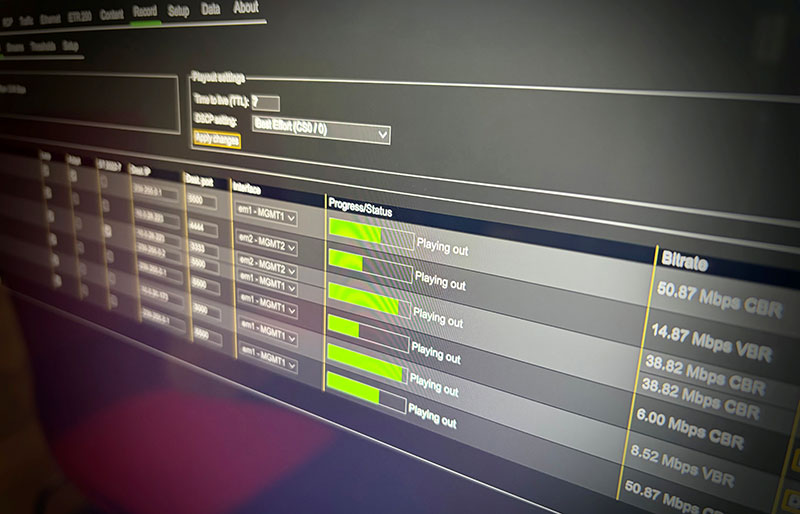
New TS Playout feature for Bridge Technologies' probes.
The addition of TS playout continues to extend the role of Bridge’s probes beyond alarming and monitoring. As holistic parts of the wider broadcast chain, they now incorporate deep diagnostics, proactive network management, reporting and compliance, practical production tools in the VB440, and signal generation for network and broadcast setup. Within the VB330, TS playout supports a wider broadcast industry trend to converge compressed and uncompressed environments, eroding the traditional distinction between production and distribution.
Validating the Distribution Chain
Commenting on the announcement, Bridge Technologies Chairman Simen K Frostad talked about the ongoing need for fast set ups for live production, against the accuracy and reliability with which they must deliver on the day. “With TS playout, network engineers can generate a test signal and validate their entire distribution chain ahead of time – before cameras, switchers or encoders are in place,” he said. “Interestingly, some customers are successfully using this functionality not just for setup, but on-air as well.
"This new development in our distribution side probes takes functions that would normally be deployed on separate monitoring devices and condenses them into a single box, resulting in a single interface, a simpler workflow, fewer space and energy requirements and lower operational costs. With our sound understanding of IP networking, we can deliver more functionality with less physical infrastructure.” www.bridgetech.tv