

Phoenix Broadcast services provider deploys Grass Valley cameras, switchers and hybrid workflow infrastructure to modernise live sports and entertainment productions across APAC.
Phoenix Broadcast Solutions, based in Singapore, is expanding its live production operations across APAC and the Middle East. The company delivers live production services for international sports and multi-event productions, specialising in OB, REMI and hybrid workflows for major sporting events and broadcasters within the region.
As part of the revamp of its operations, Phoenix Broadcast looked for a scalable production ecosystem capable of supporting rapid deployment into multiple locations, supporting varied production environments. As a result, the company has entered into a three-year enterprise agreement with Grass Valley including deployment of Grass Valley LDX Series cameras, K-Frame production switchers and Densité/XIP infrastructure to support OB, REMI and hybrid production workflows across sports and entertainment projects.
Scalable, Adaptable Infrastructure
Founder & Managing Director at Phoenix Broadcast Solutions Siddhartha Tyagi said, “We were looking for a production infrastructure that could scale with the type of projects we are delivering into different markets. That meant improving workflow flexibility and interoperability, supporting UHD and 4K production requirements, enabling REMI and distributed workflows, and maintaining reliability across large-scale multi-venue sports productions. We also wanted the flexibility to work across both IP and baseband environments depending on the operational and regional requirements of each project.”
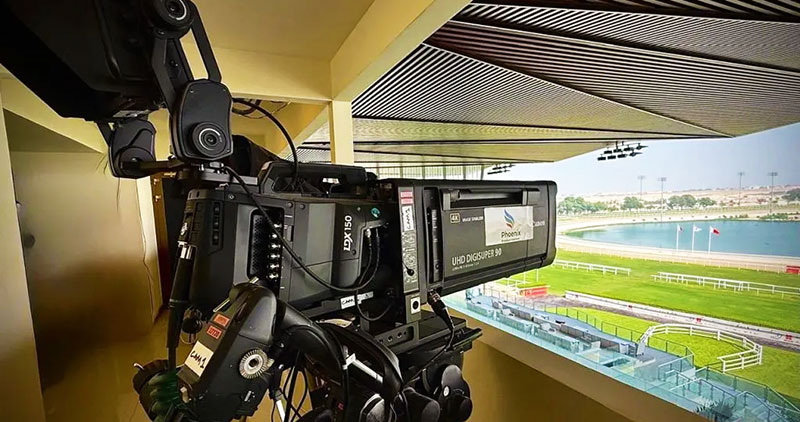
The deployment includes LDX 150 and LDX 98 cameras for live sports production, alongside K-Frame switchers with Kayenne and Karrera control surfaces for multi-camera productions across OB and REMI environments. Densité and XIP infrastructure will support a combination of IP and baseband workflows, so that Phoenix can adapt systems according to venue, project and regional requirements.
Modular Processing Framework
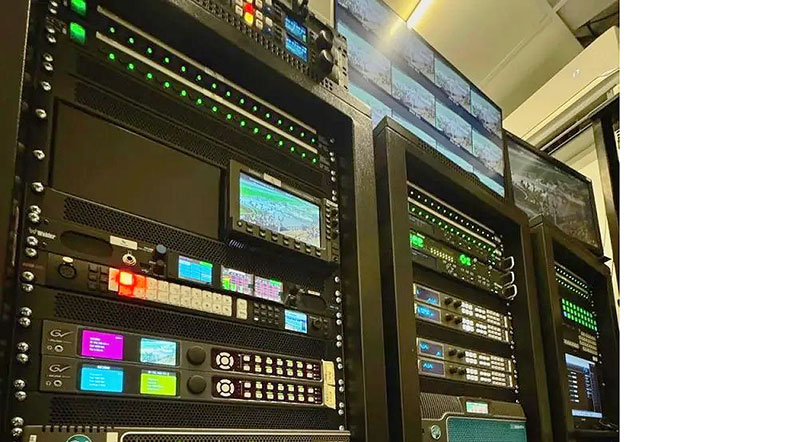
Densité is Grass Valley’s scalable, efficient modular processing framework for media production. Through its huge range of frames and modules, which support direct, multiformat operation across SDI and IP applications, broadcasters and content creators can use this system to manage and deliver media content of a consistent quality across varied platforms and formats, while optimising performance in most production environments.
Densité’s modular cards address audio/video processing and distribution tasks of all types - signal handling, 12G-SDI and fibre transmission, synchronisation and channel branding
The range of frames supporting the cards is also comprehensive and scalable, specialised for modern broadcast and media setups. Options go from a compact half-rack 1 RU desktop version up to a high-capacity 4 RU frame built for IP-enabled modules and large-scale operations. Densité includes high-speed connectivity options that enhance data transfer rates to achieve efficient signal processing and distribution.
Able to process SDI and IP signals simultaneously, supporting video formats including 4K, 3G, HD, SD and analogue, the Densite frame design optimises space, housing a large number of modules in a compact footprint to achieve the density required for today’s broadcast facilities.
Processing for Dynamic Environments
The XIP-3911 Application Platform is built for dynamic environments and SDI and IP integration. It facilitates a smooth transition between SDI and IP workflows that allows broadcasters to integrate new products and approaches without disrupting existing systems. As Tyagi mentioned, this capability is crucial for organisations like Phoenix wanting to modernise their infrastructure while maintaining continuity.
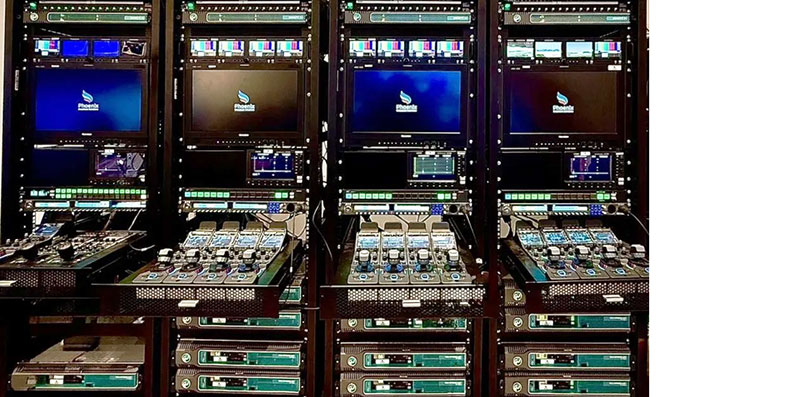
Once loaded with signal processing applications, the XIP-3911 can handle up to two or four channels of HD, 4K UHD and HDR video. When dedicated encoding or decoding applications are installed, it supports up to eight channels in both directions, a typical requirement for efficiently managing multiple simultaneous streams in live production environments. Its compliance with SMPTE ST 2110 eases integration into existing broadcast IP networks and supports interoperability with other equipment.
Maintaining Quality
Systems are being deployed in phases in line with Phoenix’s production schedule across APAC and the Middle East. Grass Valley and Phoenix engineering teams are collaborating on configuration and integration between a range of third-party audio, communications and transmission systems.
“Grass Valley’s solutions give us the flexibility and reliability we need to maintain a level of quality in diverse markets,” Tyagi said. “This partnership is an important step in building a broadcast infrastructure that we can keep up to date over time.”
The systems are currently in use to cover Phoenix’s major international productions, improving operational flexibility across projects while enabling faster deployment between regions and greater consistency over a number of workflows.
From Grass Valley’s point of view, the agreement strengthens its position within growing live production markets across APAC and the Middle East. The partnership is expected to expand further as Phoenix Broadcast Solutions continues to grow its operations across sports and live event production. www.grassvalley.com